Anticipatory Bail in Faridabad Under Section 482 BNSS: A Simple Step-by-Step Guide
Getting a call that an FIR might be filed against you is frightening. Your mind races. Will the police arrest.
When a family member is arrested in a drug case, the first question is always the same: how soon can we get bail?
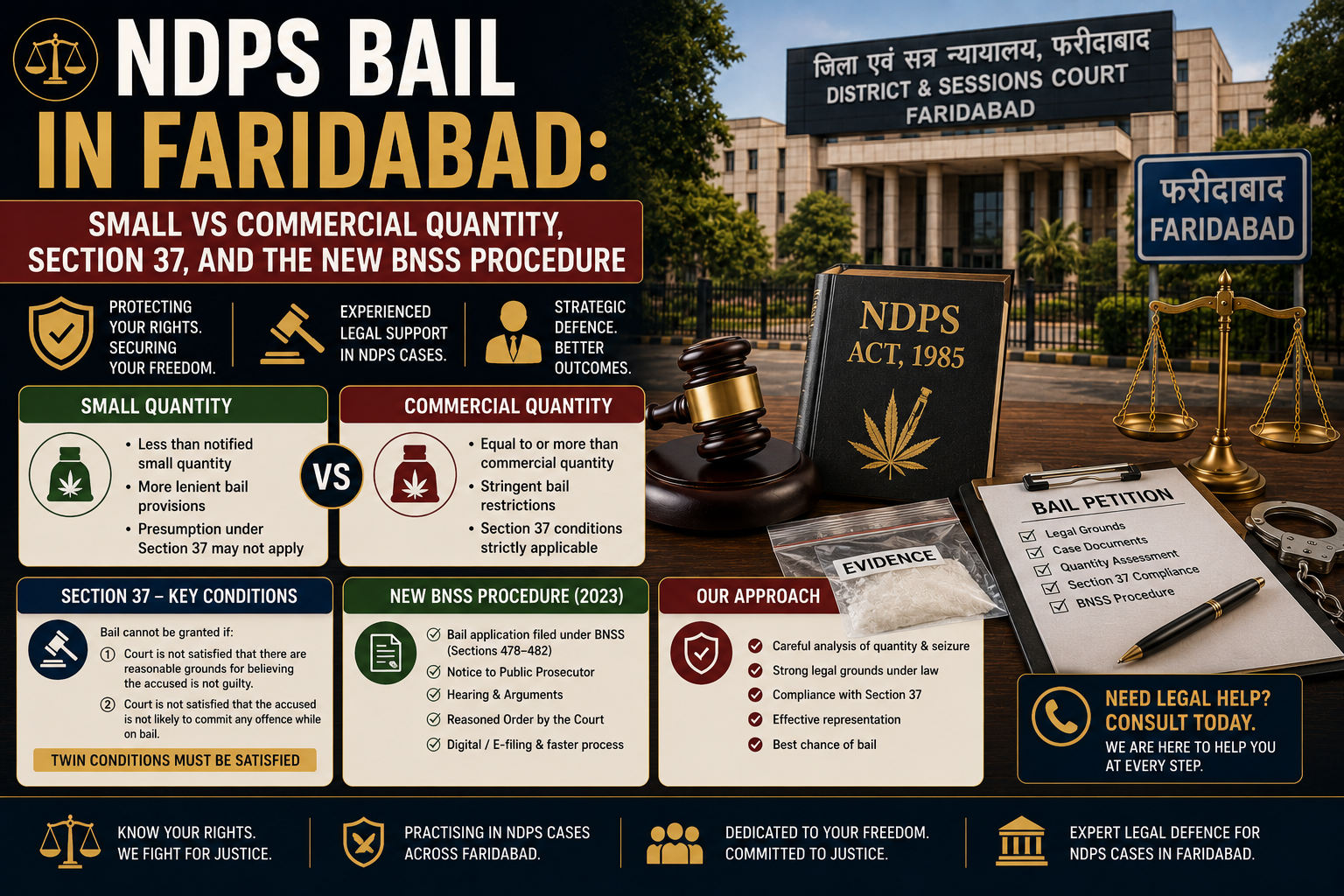
The honest answer is that in NDPS matters, everything turns on one number the quantity recovered. That single figure decides the punishment, the difficulty of bail, and sometimes whether a person spends months or years in custody before trial.
Here is how it works, explained simply.
An important clarification first. The new criminal laws BNS, BNSS and BSA did not replace the Narcotic Drugs and Psychotropic Substances Act, 1985. The NDPS Act remains fully in force.
What changed is the procedure around it. Bail applications that were earlier filed under the CrPC are now filed under the BNSS, 2023.
The NDPS Act divides every drug into three bands, based on a Central Government notification:
Punishment: rigorous imprisonment up to 1 year, or fine up to ₹10,000, or both.
More than small but less than commercial. Punishment: up to 10 years rigorous imprisonment, plus fine up to ₹1,00,000.
Punishment: rigorous imprisonment of not less than 10 years, extending to 20 years, plus a minimum fine of ₹1,00,000.
| Substance | Small Quantity | Commercial Quantity |
| Heroin | 5 gm | 250 gm |
| Charas / Hashish | 100 gm | 1 kg |
| Ganja | 1 kg | 20 kg |
| Cocaine | 2 gm | 100 gm |
| Opium | 25 gm | 2.5 kg |
These figures come from the official notification and should always be verified against the current version.
Section 37 of the NDPS Act is why drug cases are considered among the hardest for bail. Where it applies, the court cannot grant bail unless:
These are called the “twin conditions”, and they sit on top of the ordinary bail requirements.
This is the point that changes cases. Section 37’s rigours apply only to offences involving commercial quantity and to certain specified offences such as financing illicit traffic (Section 27A).
For small and intermediate quantity cases, Section 37 does not apply. Bail is decided on ordinary principles — and is very often granted. Many families panic unnecessarily because nobody explained this distinction to them.
Experienced counsel look closely at procedural compliance, because the NDPS Act demands strict adherence:
Courts have increasingly recognised that Section 37 cannot become a licence for indefinite imprisonment. Where an undertrial has spent long years in custody with no realistic prospect of the trial concluding, the Supreme Court has held that the right to a speedy trial under Article 21 can outweigh the statutory bar.
The BNSS also contains provisions limiting the maximum detention period of undertrial prisoners, which counsel can invoke in appropriate cases.
NDPS matters in Faridabad are tried by the designated NDPS Special Court at the District Courts, and appeals lie to the Punjab & Haryana High Court.
NDPS bail is difficult, but it is not impossible — and it is far easier than most families assume when the recovery falls below commercial quantity. Two things matter most: knowing exactly which quantity band applies, and examining whether the investigating agency followed the strict procedure the Act demands.
Do not delay. Collect the FIR, seizure memo and recovery documents, and consult a practising NDPS advocate in Faridabad at the earliest possible stage.
Note: This blog is just for educational purposes; it does not act as legal advice. For legal representation, contact a practising advocate. This blog cannot be used as legal evidence or for legal purposes.

 Blog
Blog
Getting a call that an FIR might be filed against you is frightening. Your mind races. Will the police arrest.
 Blog
Blog
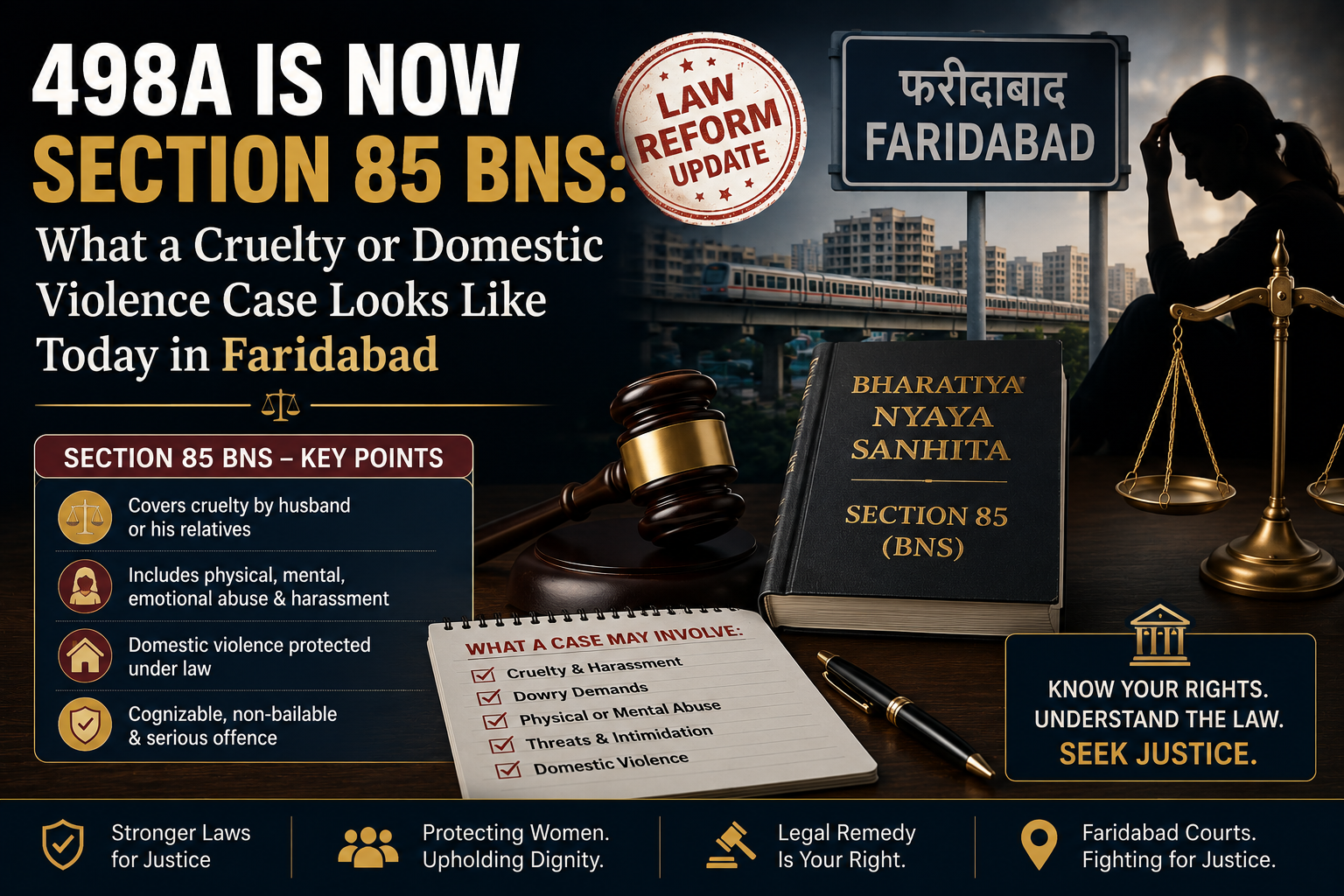
For decades, three characters carried enormous weight in Indian family disputes: 498A. Mention that number and everyone understood — a.
 Blog
Blog
Not every marriage ends in a courtroom battle. Sometimes both people simply accept that it is over, and want to.
 Blog
Blog
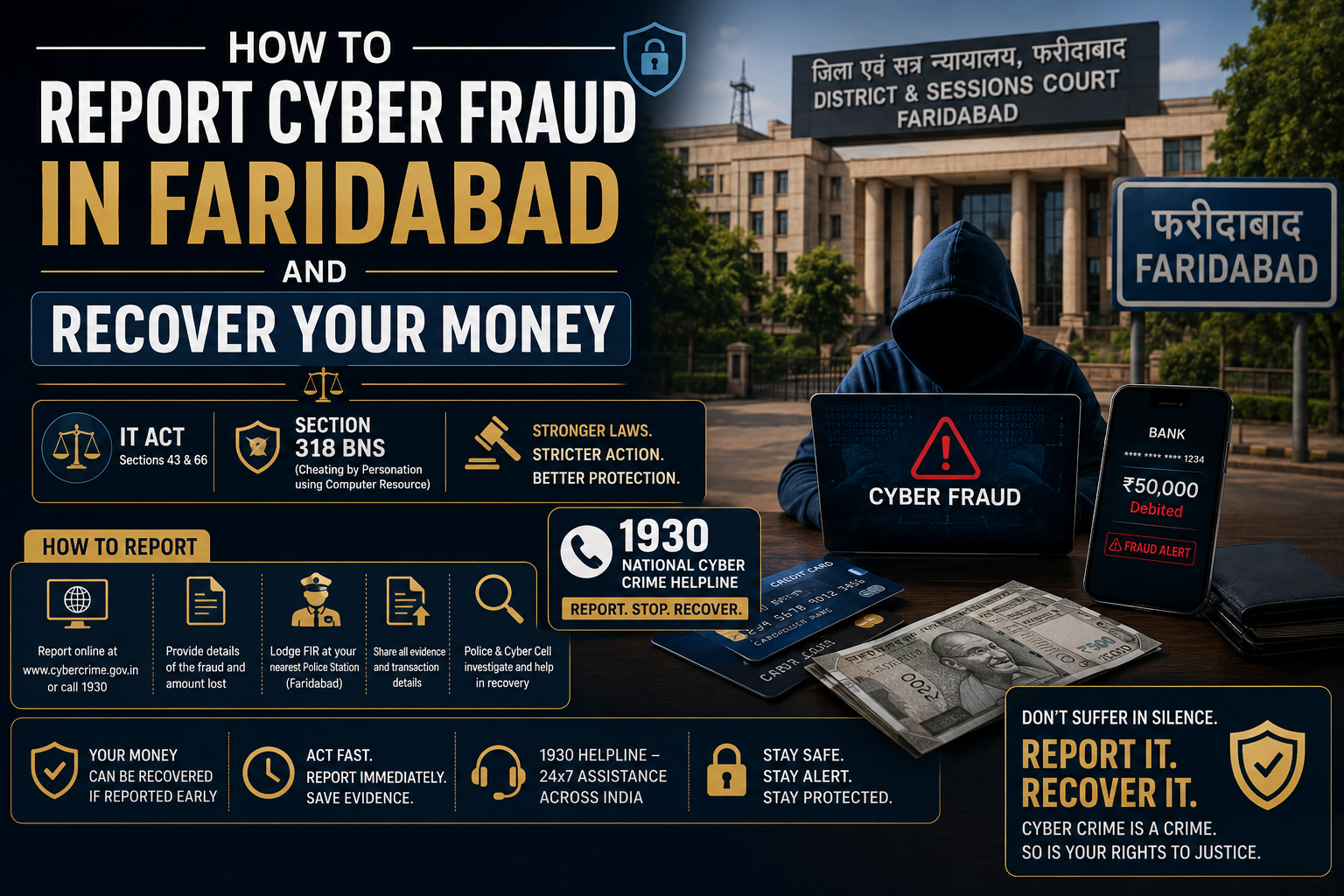
You get an SMS. Money has left your account — money you never authorised. Your hands shake. You call the.
 Blog
Blog
On 1 July 2024, India changed the foundation of its criminal justice system. Three colonial-era laws were replaced: Indian Penal.
 Blog
Blog
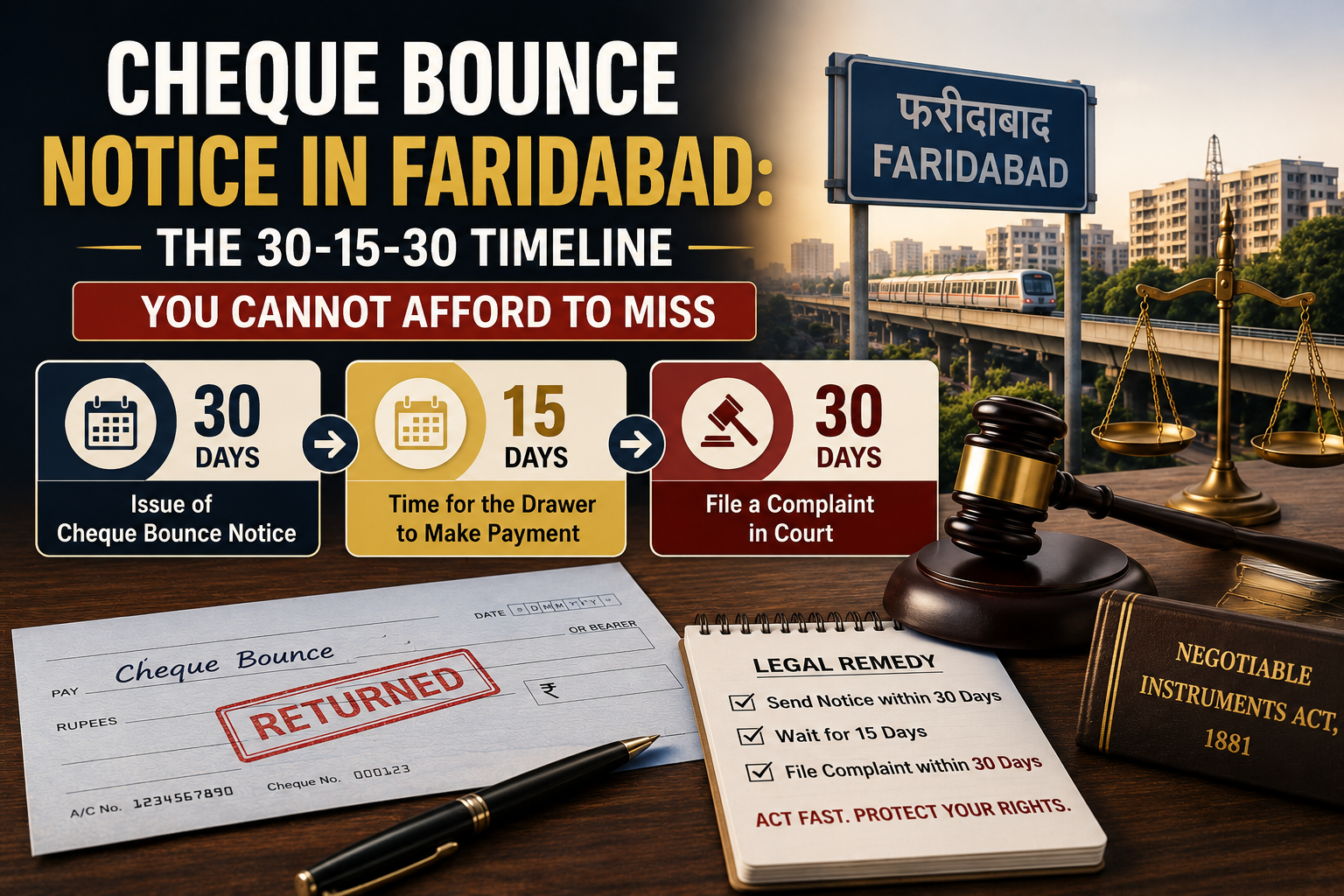
Someone gave you a cheque. You deposited it. The bank returned it unpaid. Right now, a clock has started running.