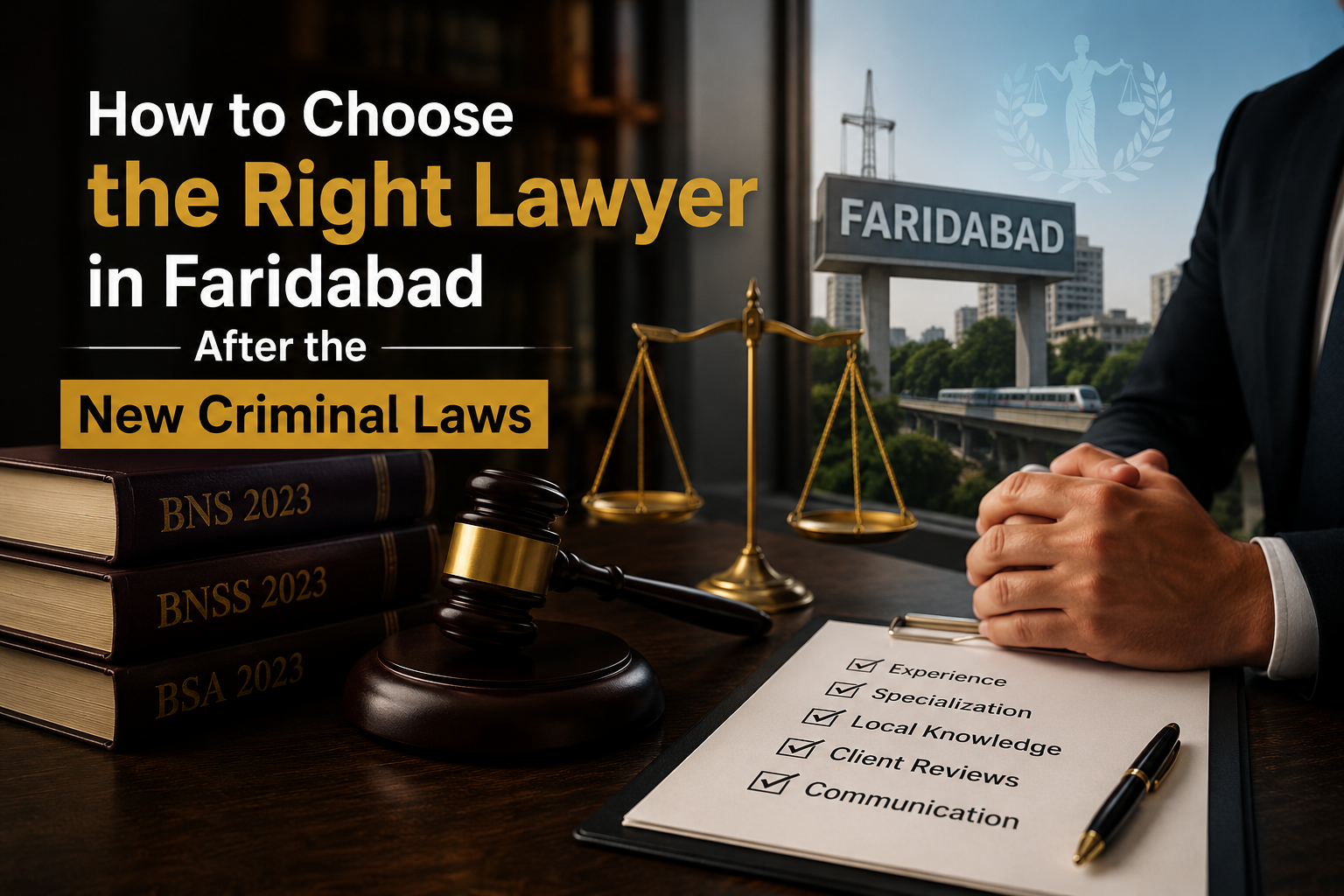
How to Choose the Right Lawyer in Faridabad After the New Criminal Laws (BNS, BNSS, BSA)
On 1 July 2024, India changed the foundation of its criminal justice system. Three colonial-era laws were replaced: Indian Penal.
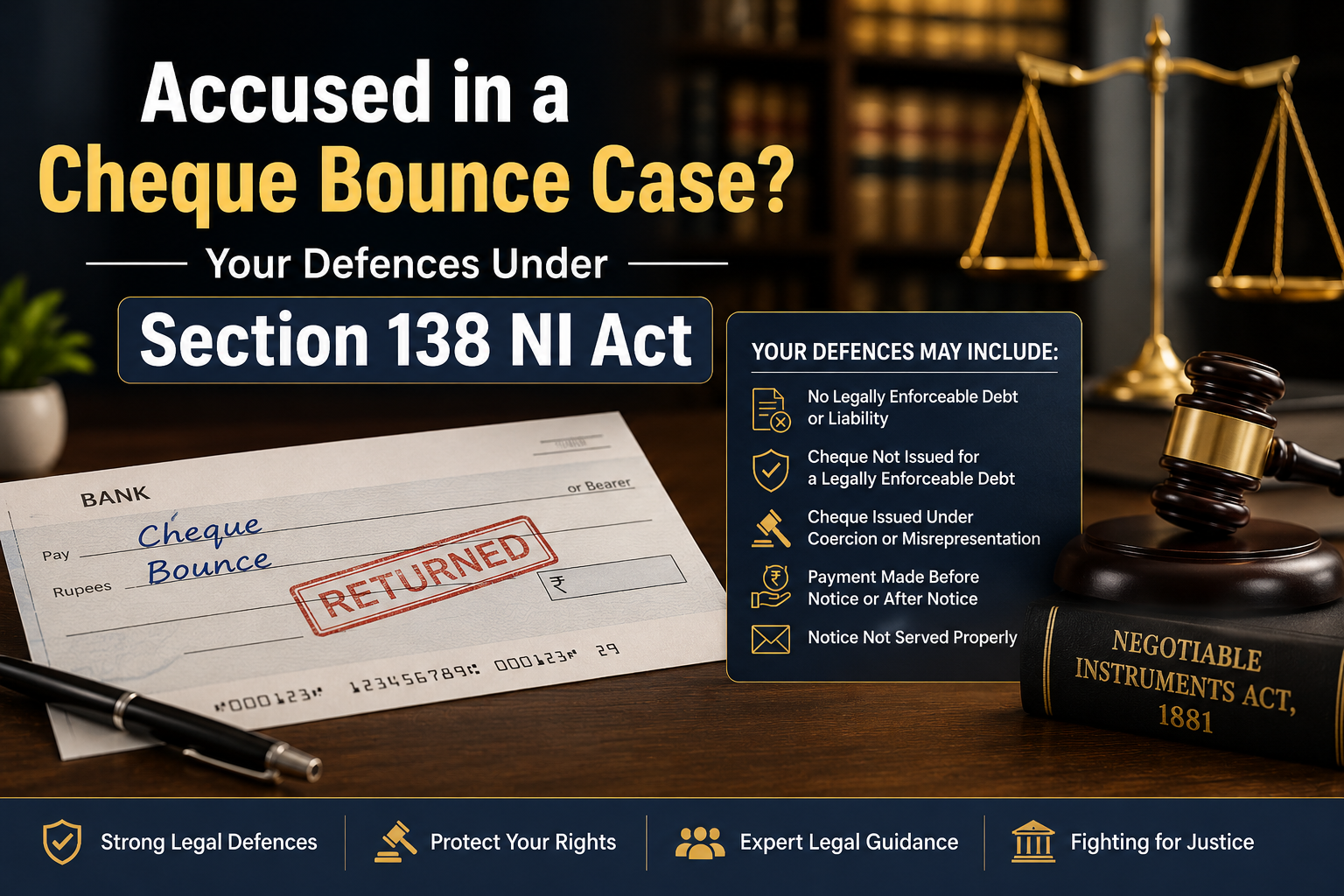
Someone gave you a cheque. You deposited it. The bank returned it unpaid.
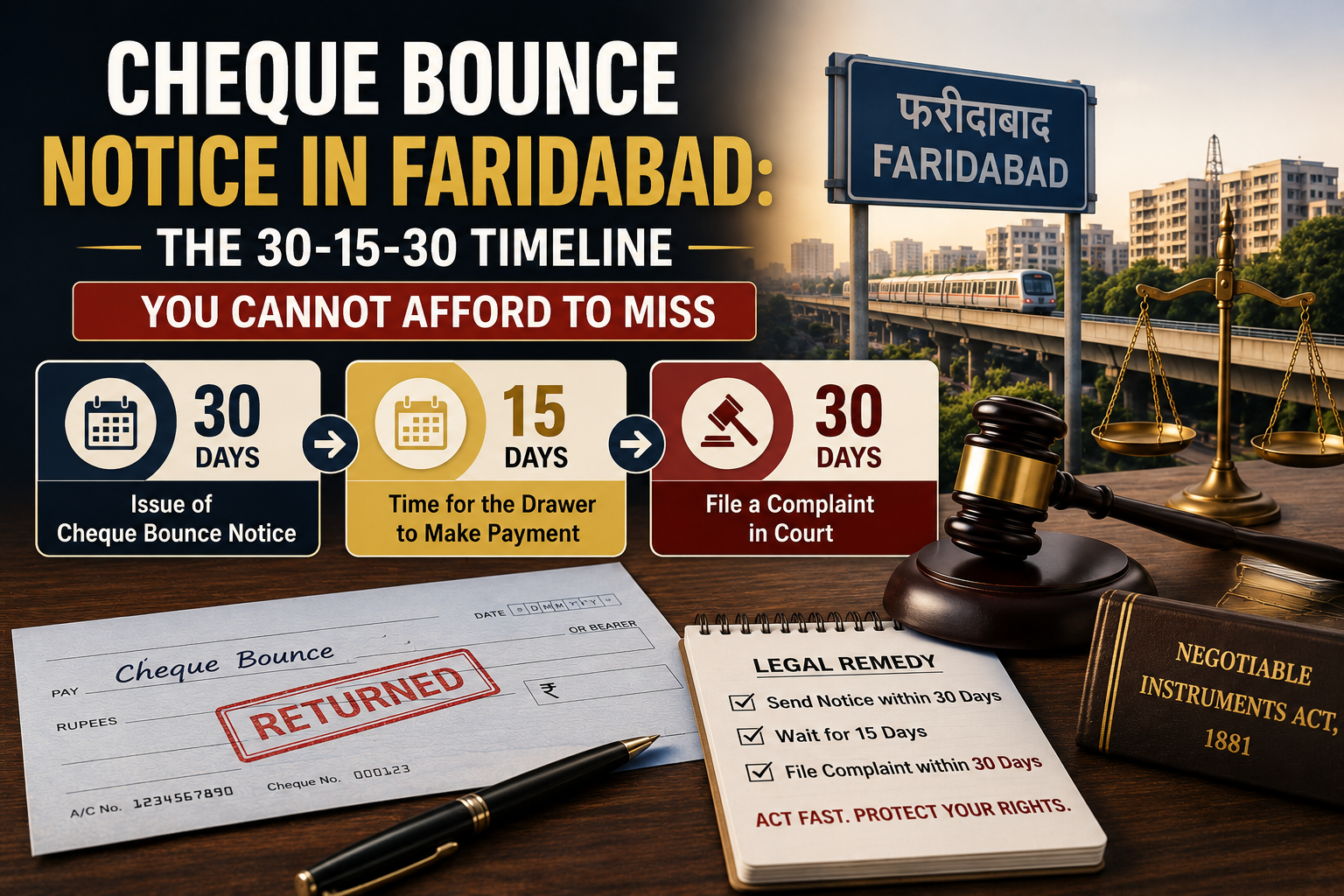
Right now, a clock has started running — and if you miss the deadlines, you lose the right to file a criminal case entirely. No judge can help you after that. This is the single most common way people in Faridabad lose perfectly good cheque bounce cases.
The timeline is easy to remember: 30 – 15 – 30.
The new criminal codes — BNS, BNSS and BSA — replaced the IPC, CrPC and Evidence Act. They did not touch the Negotiable Instruments Act, 1881.
Cheque bounce remains an offence under Section 138 of the NI Act, exactly as before. Ignore any blog telling you otherwise.
For a cheque bounce case to succeed, these conditions must be met:
Note that “account closed”, “payment stopped” and similar reasons have also been held to attract Section 138.
From the date you receive the bank’s return memo (the cheque dishonour slip), you have 30 days to send a written legal demand notice to the drawer.
This notice must:
Send it to the correct address and keep the postal receipt and tracking record. Courts have held that a notice properly sent to the last known address is deemed served, even if the person refuses or avoids it. But you must be able to prove despatch.
A common and fatal error: demanding an amount different from the cheque amount. Demand exactly what the cheque says. Interest and costs can be claimed separately in the complaint.
Once the notice is received, the drawer gets 15 days to pay.
If he pays within this window, the matter ends. No offence is committed.
If he does not, the offence under Section 138 is complete on the 16th day. That is when your cause of action arises.
From the expiry of that 15-day period, you have 30 days to file a criminal complaint before the Magistrate.
Two warnings here:
Since the 2015 amendment to the NI Act, jurisdiction lies with the court where the payee’s bank branch — the branch where the cheque was deposited for collection — is located.
So if you banked the cheque in Faridabad, the complaint is generally filed before the Magistrate at the District Courts, Faridabad.
On conviction under Section 138, the court may award imprisonment of up to two years, or a fine up to twice the cheque amount, or both — with compensation payable to you.
Two provisions worth knowing:
Also remember Section 139: the law presumes the cheque was issued for a valid debt. The burden falls on the accused to rebut that presumption — a significant advantage for you.
Section 138 cases are compoundable under Section 147. Parties can settle at any stage. Courts actively encourage this, and settling early avoids years of hearings. Do note that courts have imposed graded costs on those who settle only at a very late stage.
A cheque bounce case is one of the few legal remedies in India where a well-prepared complainant has the odds firmly in their favour — provided the deadlines are met.
Do not wait for the drawer’s promises. The moment your cheque returns, note the date on the return memo, and start the 30-day notice clock. Ideally, get the notice drafted by a cheque bounce advocate in Faridabad, because a defective notice cannot be cured later.
Note: This blog is just for educational purposes; it does not act as legal advice. For legal representation, contact a practising advocate. This blog cannot be used as legal evidence or for legal purposes.

 Blog
Blog
On 1 July 2024, India changed the foundation of its criminal justice system. Three colonial-era laws were replaced: Indian Penal.
 Blog
Blog
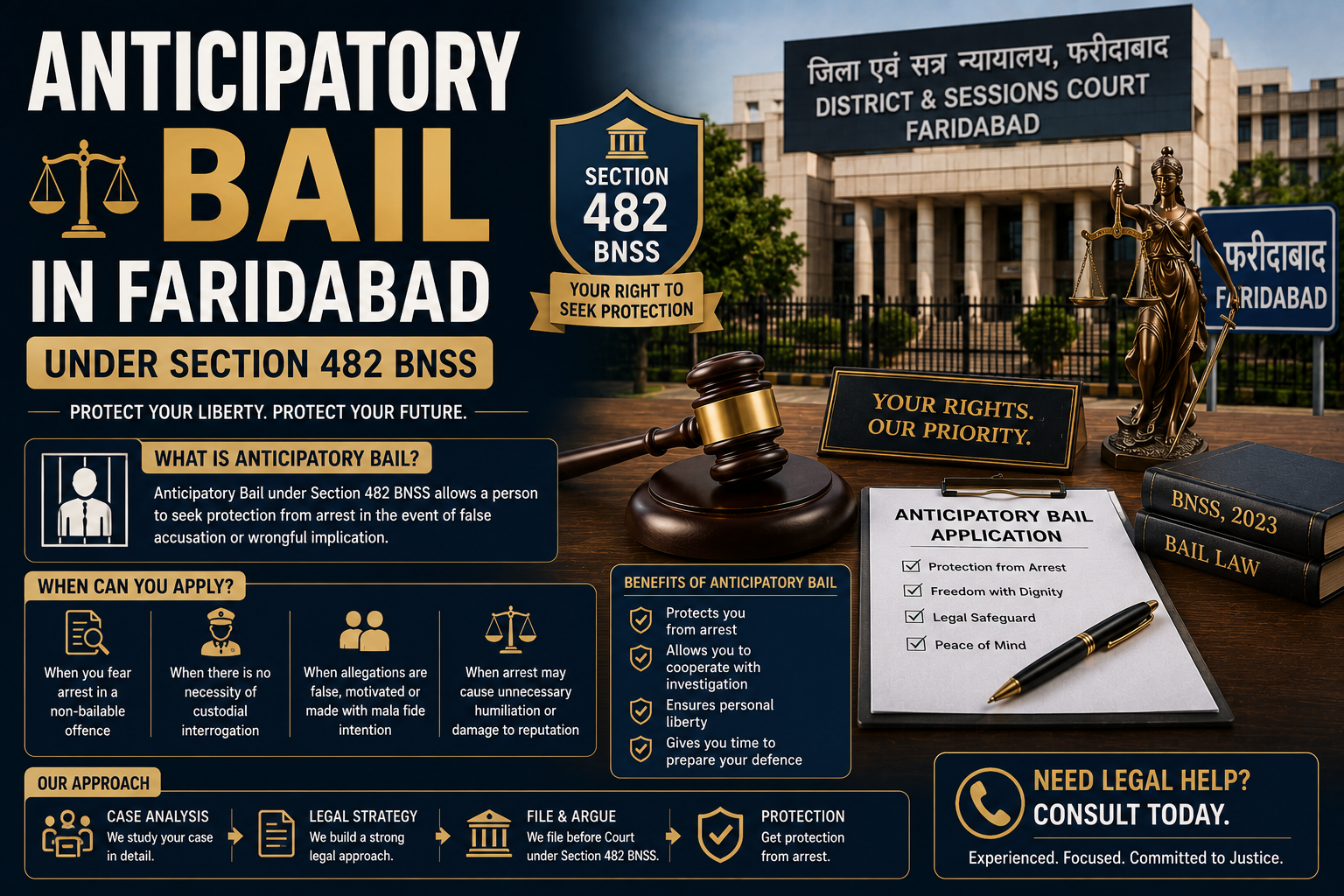
Getting a call that an FIR might be filed against you is frightening. Your mind races. Will the police arrest.
 Blog
Blog
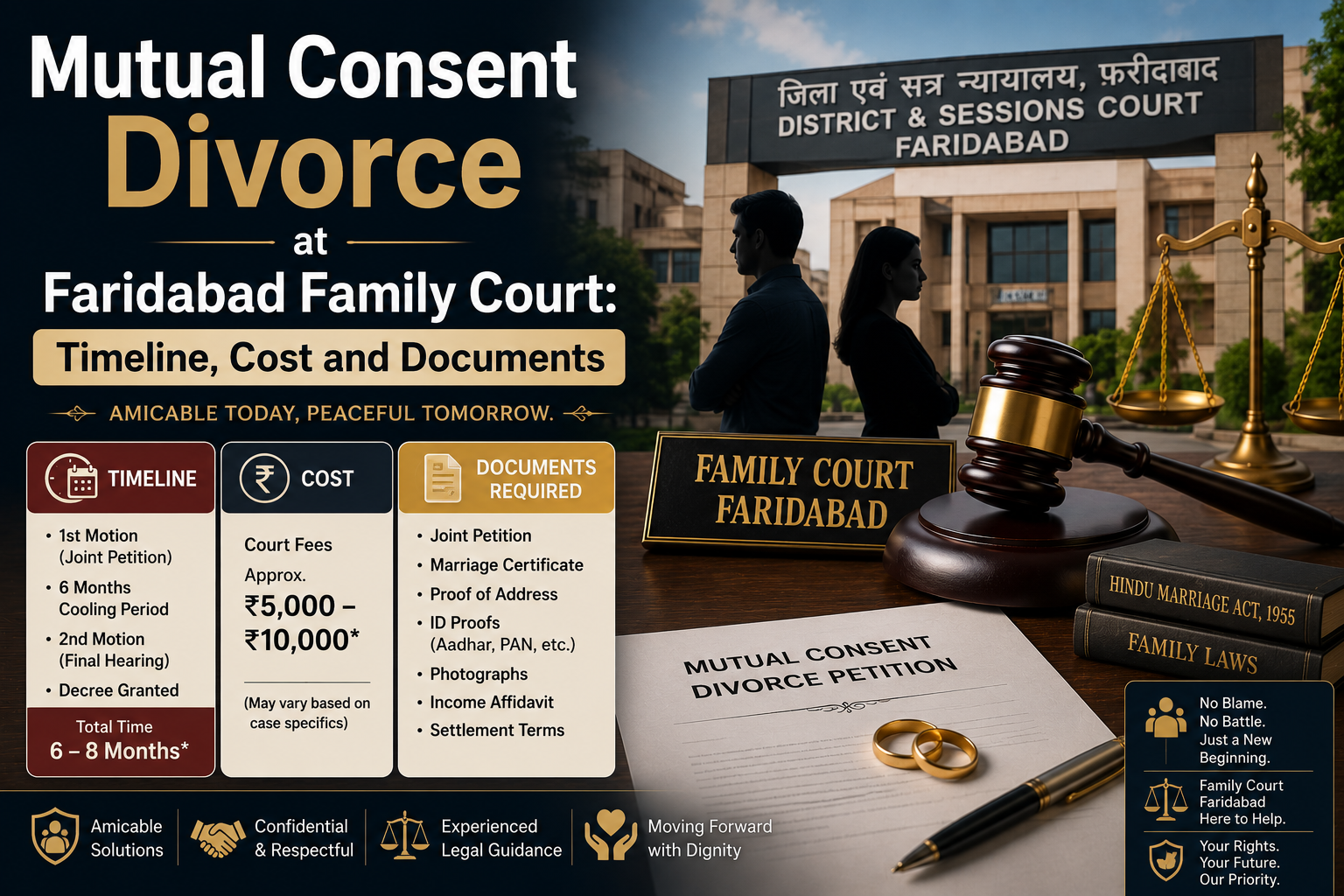
Not every marriage ends in a courtroom battle. Sometimes both people simply accept that it is over, and want to.
 Blog
Blog
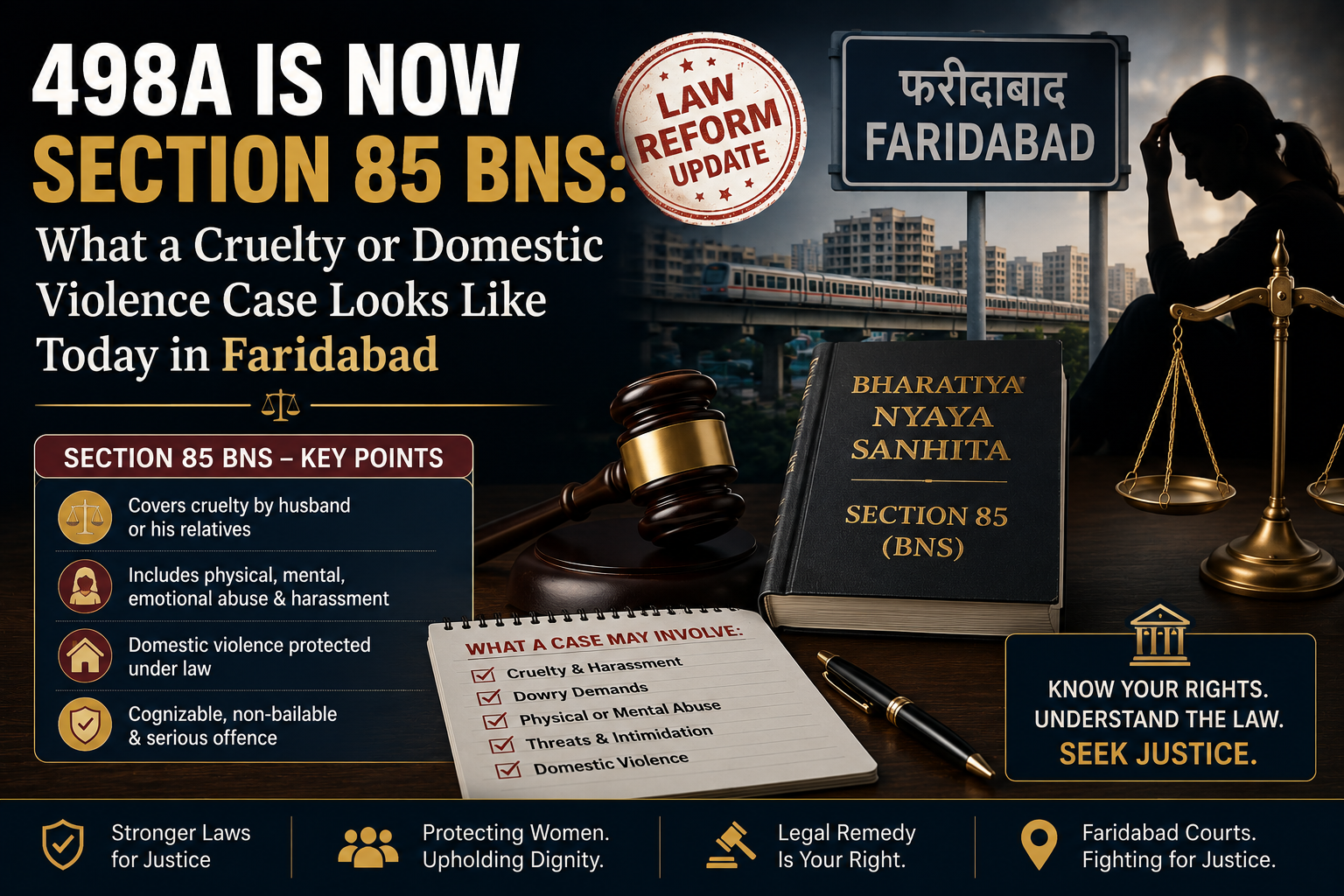
For decades, three characters carried enormous weight in Indian family disputes: 498A. Mention that number and everyone understood — a.
 Blog
Blog
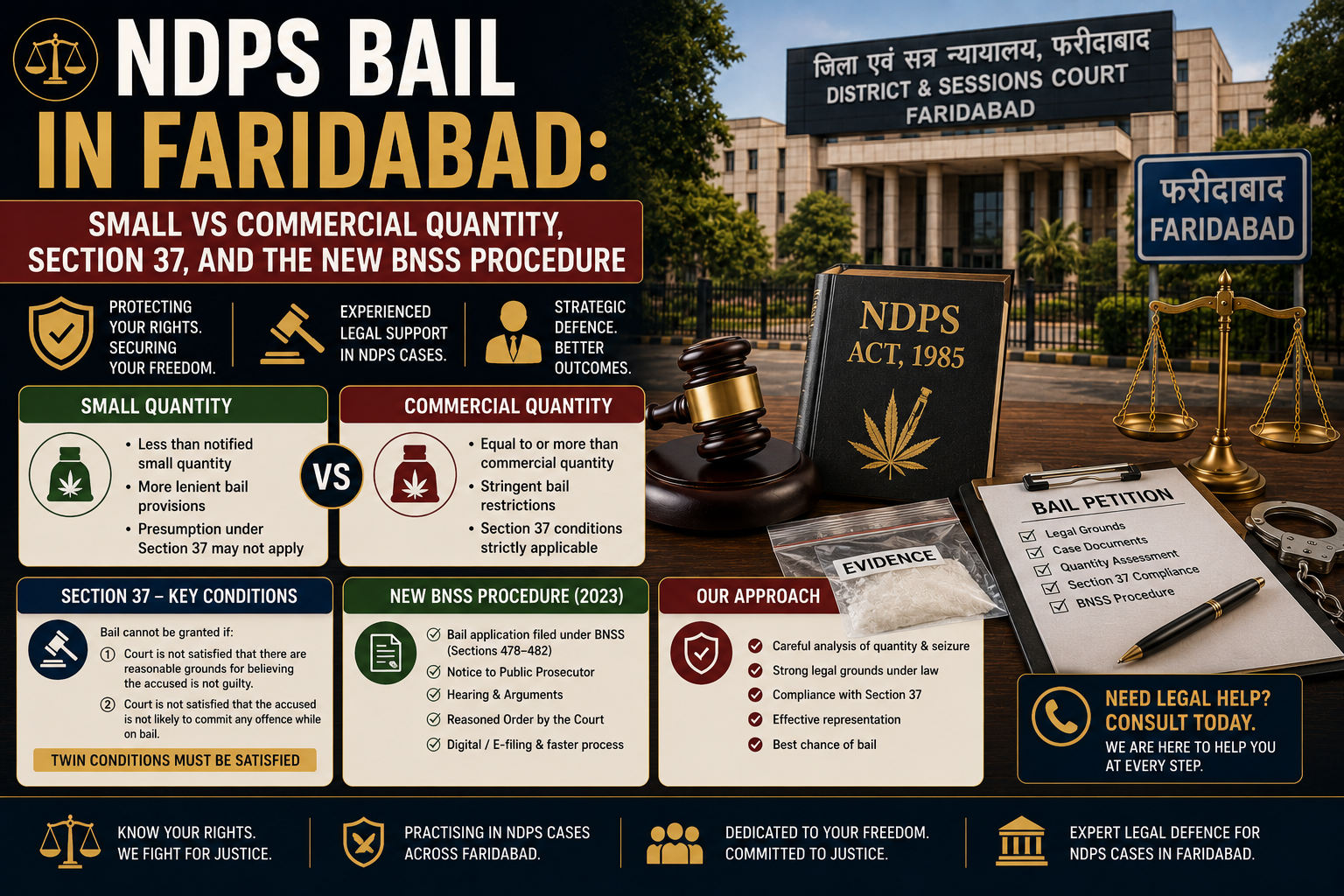
When a family member is arrested in a drug case, the first question is always the same: how soon can.
 Blog
Blog
A court summons arrives. Your name is on it, and the words "Section 138, Negotiable Instruments Act" stare back at.