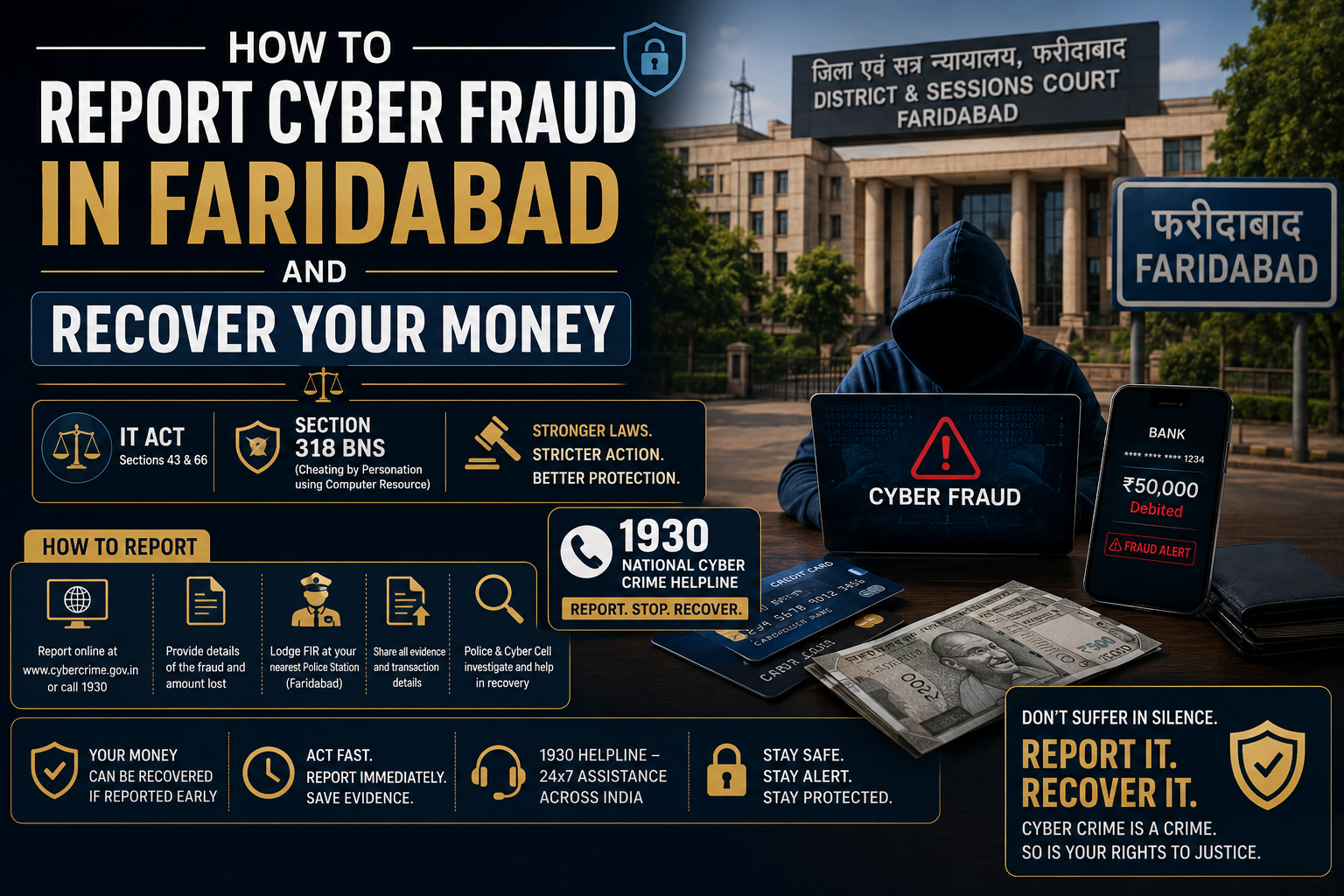
How to Report Cyber Fraud in Faridabad and Recover Your Money: IT Act, Section 318 BNS and the 1930 Helpline
You get an SMS. Money has left your account — money you never authorised. Your hands shake. You call the.
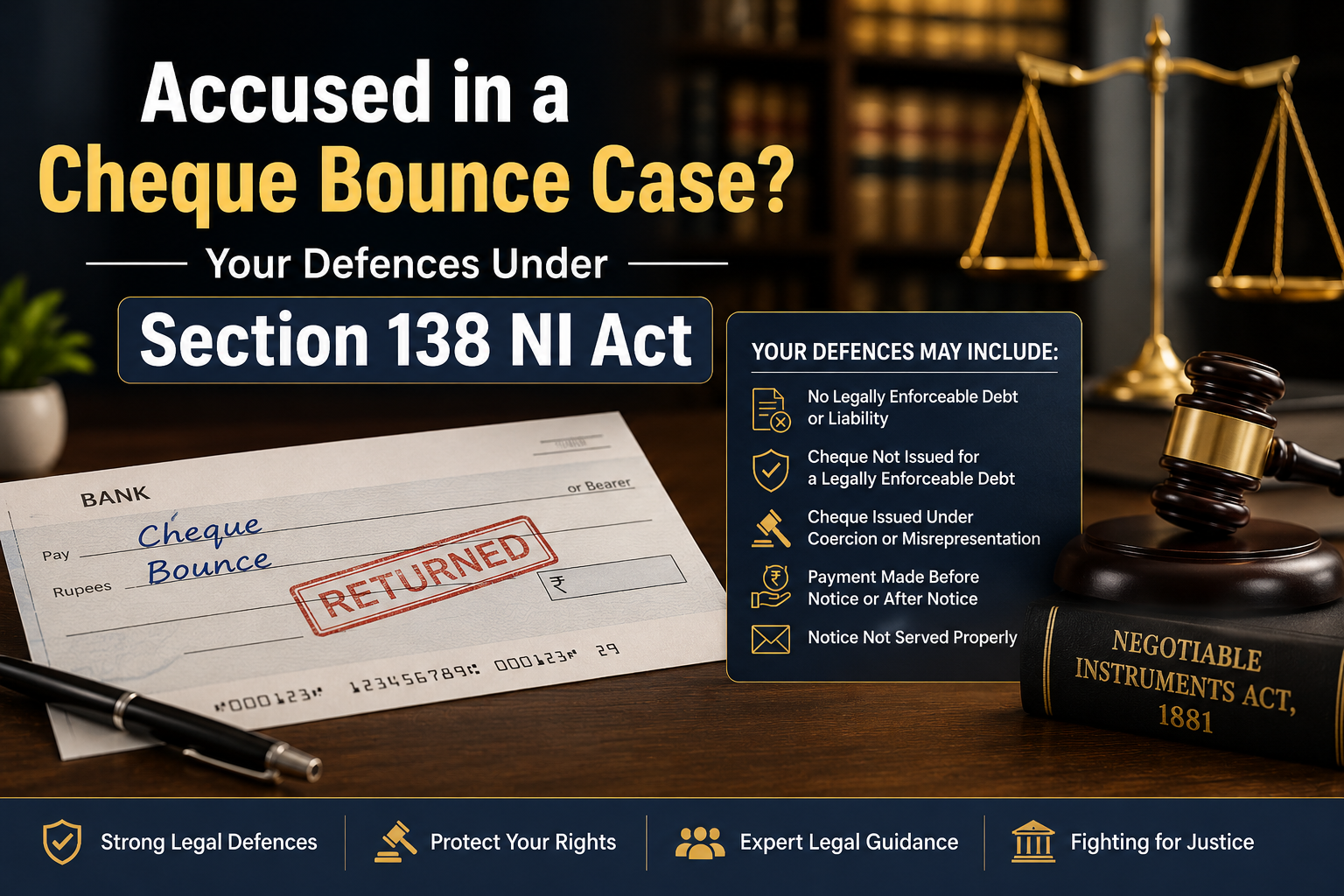
A court summons arrives. Your name is on it, and the words “Section 138, Negotiable Instruments Act” stare back at you.
Most people react in one of two ways: they panic and assume jail is coming, or they ignore it entirely and hope it goes away. Both reactions cause serious damage.
Here is the reality. A cheque bounce case is defendable — but only if you engage with it properly and early. This guide is for the person on the receiving end.
Section 139 of the NI Act creates a presumption against you. The court starts by assuming the cheque was issued to discharge a genuine debt or liability.
This does not mean you are automatically guilty. It means the burden shifts to you to raise a probable defence. You do not have to prove your innocence beyond doubt — the standard is preponderance of probabilities, and you can rely on the complainant’s own documents and cross-examination to do it.
Also note: the NI Act was not replaced by the new BNS/BNSS/BSA codes. Section 138 continues exactly as before.
This is the strongest and most common defence.
Section 138 applies only where the cheque was issued for a legally enforceable debt or liability. If no such debt existed, the case fails.
Situations that fall here:
Bank statements, ledgers and income tax records are powerful here. If the complainant claims to have lent ₹20 lakh in cash but it appears nowhere in his returns, that gap matters.
The statutory notice is where complainants make mistakes. Check carefully:
A notice demanding an amount other than the cheque amount has been held to be bad in law.
These are technical points, but they end cases.
Cheques handed over as security, blank signed cheques given to an employer or lender, or cheques stolen and filled in later — all can be defended, though the circumstances matter greatly.
Be aware of the nuance: a genuine security cheque can be presented once the underlying debt actually becomes due. The defence works where no debt had crystallised at all.
Material alteration of the cheque after signing is also a defence.
If the cheque was presented after its validity period — normally three months from its date — Section 138 is not attracted.
If the cheque was issued by a company and you have been named simply because you are a director, this is often a strong defence.
Under Section 141, only those who were in charge of and responsible for the conduct of the company’s business at the relevant time can be held liable. The complaint must contain specific averments to that effect — a bare statement that you were a director is not enough.
Independent directors, non-executive directors, and those who had resigned before the cheque was issued frequently get relief on this ground. Keep your Form DIR-12 and resignation records safe.
Under Section 143A, the court may order you to pay up to 20% of the cheque amount as interim compensation during trial.
Important: the Supreme Court has clarified that this power is discretionary, not automatic. The court must apply its mind and record reasons. You are entitled to oppose such an application and place your financial position and defence on record.
If convicted and you appeal, Section 148 may require you to deposit a minimum of 20% of the award.
Being accused under Section 138 is serious but far from hopeless. The law presumes a debt — it does not presume dishonesty, and that presumption can be rebutted.
What sinks most defendants is not a weak case but avoidance: skipping hearings, losing documents, and turning up at the last stage with nothing. Gather your records, appear before the court, and consult a cheque bounce case lawyer in Faridabad at the very first summons rather than after a warrant is issued.
Note: This blog is just for educational purposes; it does not act as legal advice. For legal representation, contact a practising advocate. This blog cannot be used as legal evidence or for legal purposes.

 Blog
Blog
You get an SMS. Money has left your account — money you never authorised. Your hands shake. You call the.
 Blog
Blog
On 1 July 2024, India changed the foundation of its criminal justice system. Three colonial-era laws were replaced: Indian Penal.
 Blog
Blog
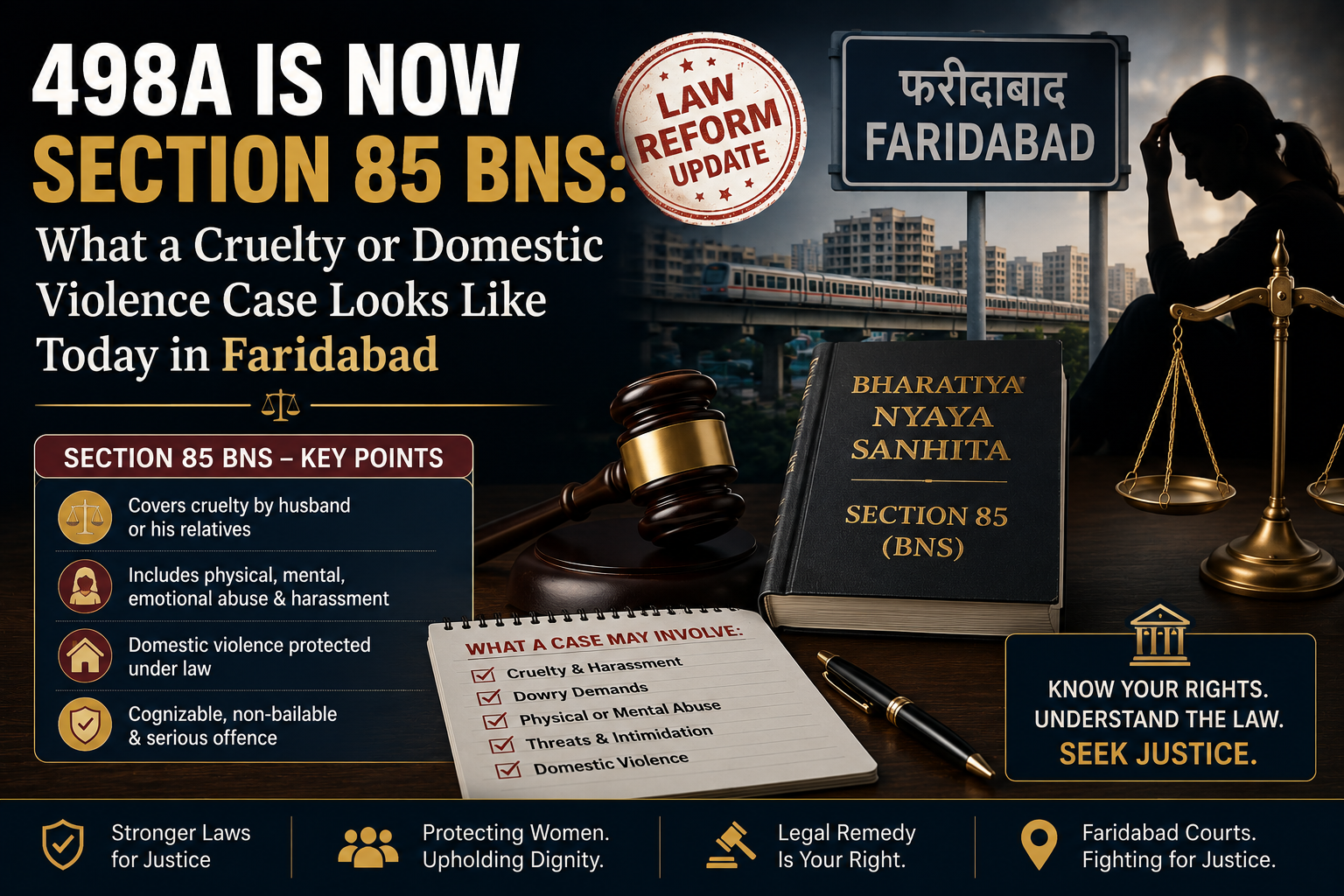
For decades, three characters carried enormous weight in Indian family disputes: 498A. Mention that number and everyone understood — a.
 Blog
Blog
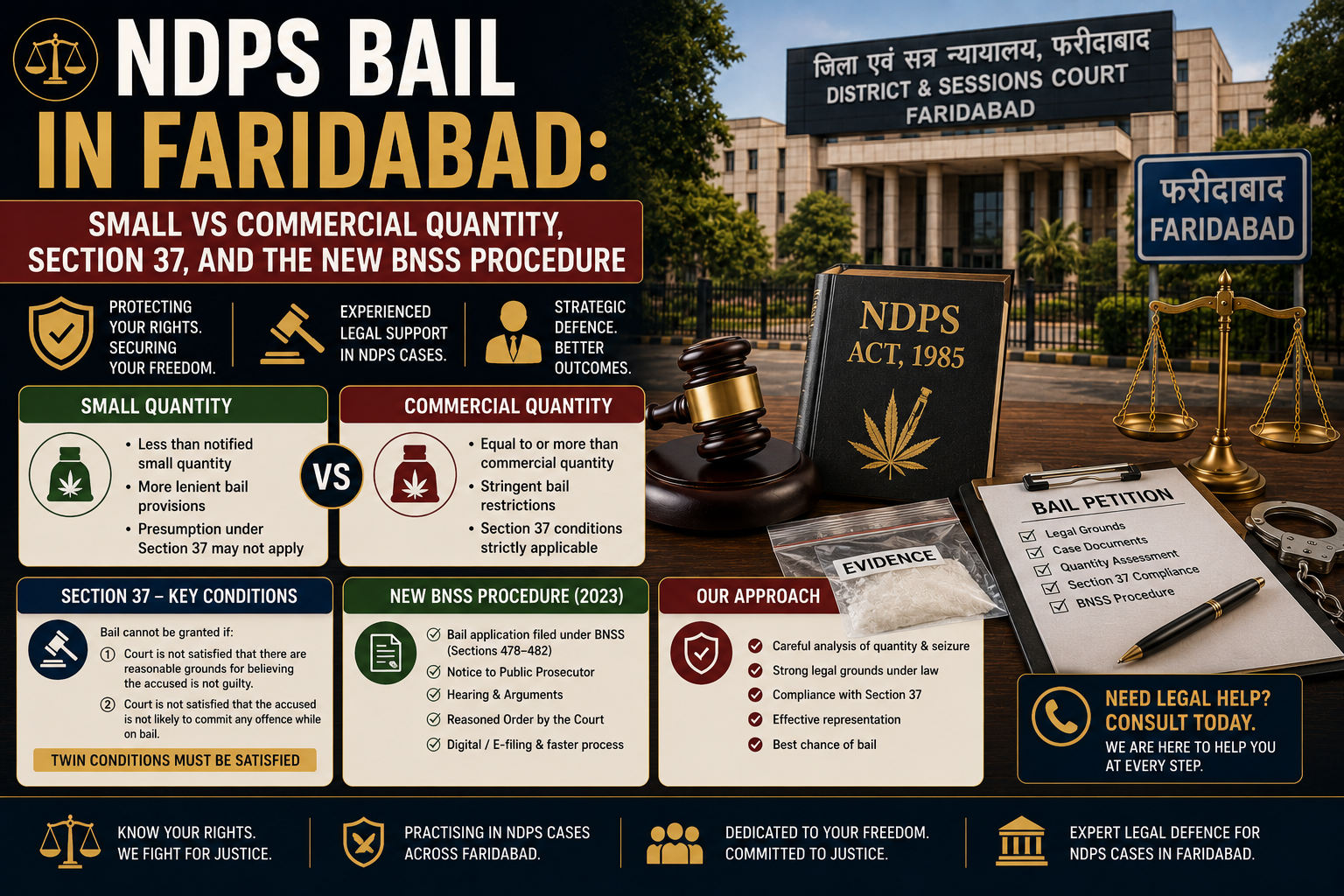
When a family member is arrested in a drug case, the first question is always the same: how soon can.
 Blog
Blog
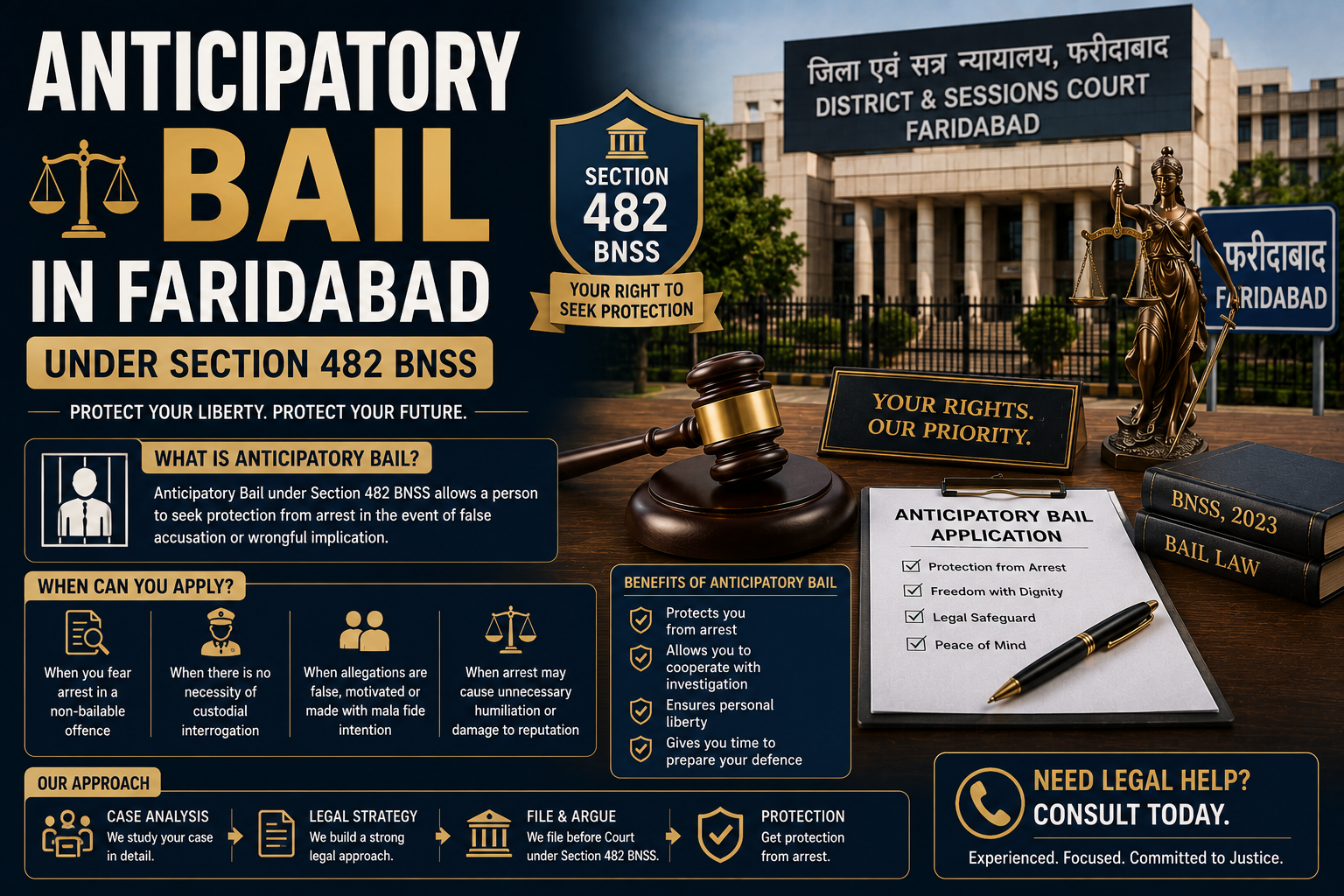
Getting a call that an FIR might be filed against you is frightening. Your mind races. Will the police arrest.
 Blog
Blog
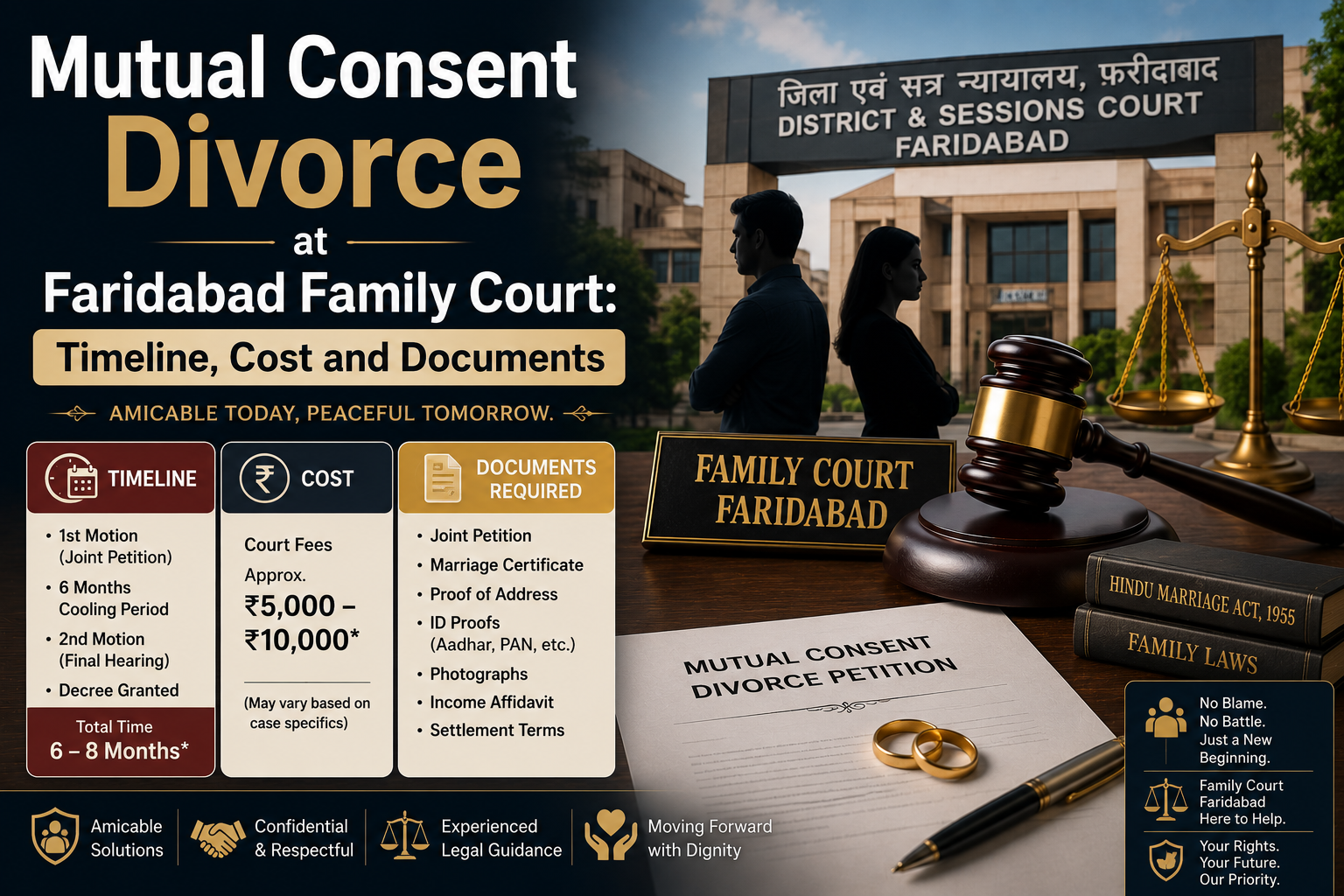
Not every marriage ends in a courtroom battle. Sometimes both people simply accept that it is over, and want to.