Mutual Consent Divorce at Faridabad Family Court: Timeline, Cost and Documents
Not every marriage ends in a courtroom battle. Sometimes both people simply accept that it is over, and want to.

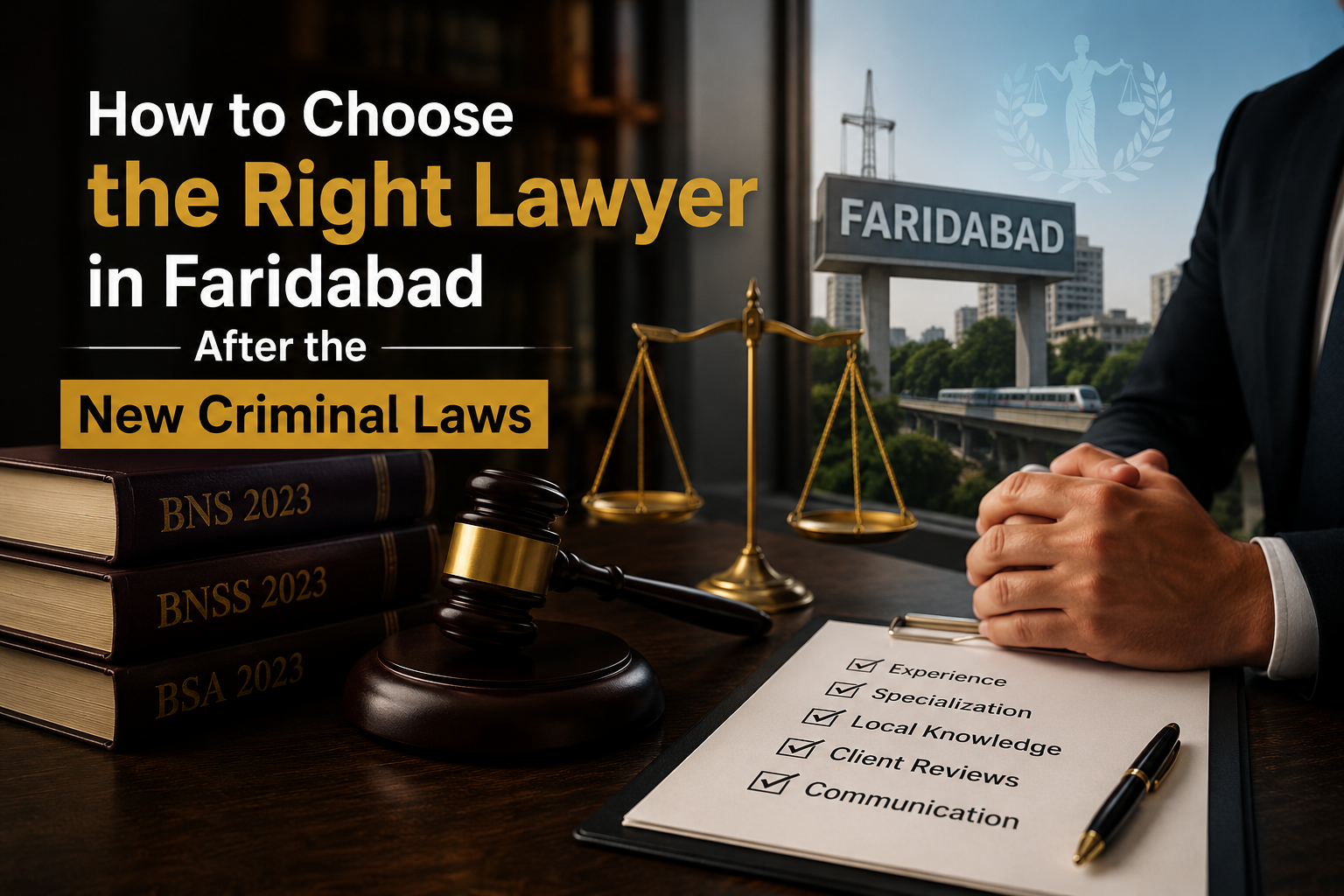
On 1 July 2024, India changed the foundation of its criminal justice system. Three colonial-era laws were replaced:
For an ordinary person in Faridabad, this raised a very practical question: does my case change, and how do I find a lawyer who actually knows the new law?
Here is a straightforward guide.
| Familiar section | New provision |
| 420 IPC — cheating | Section 318 BNS |
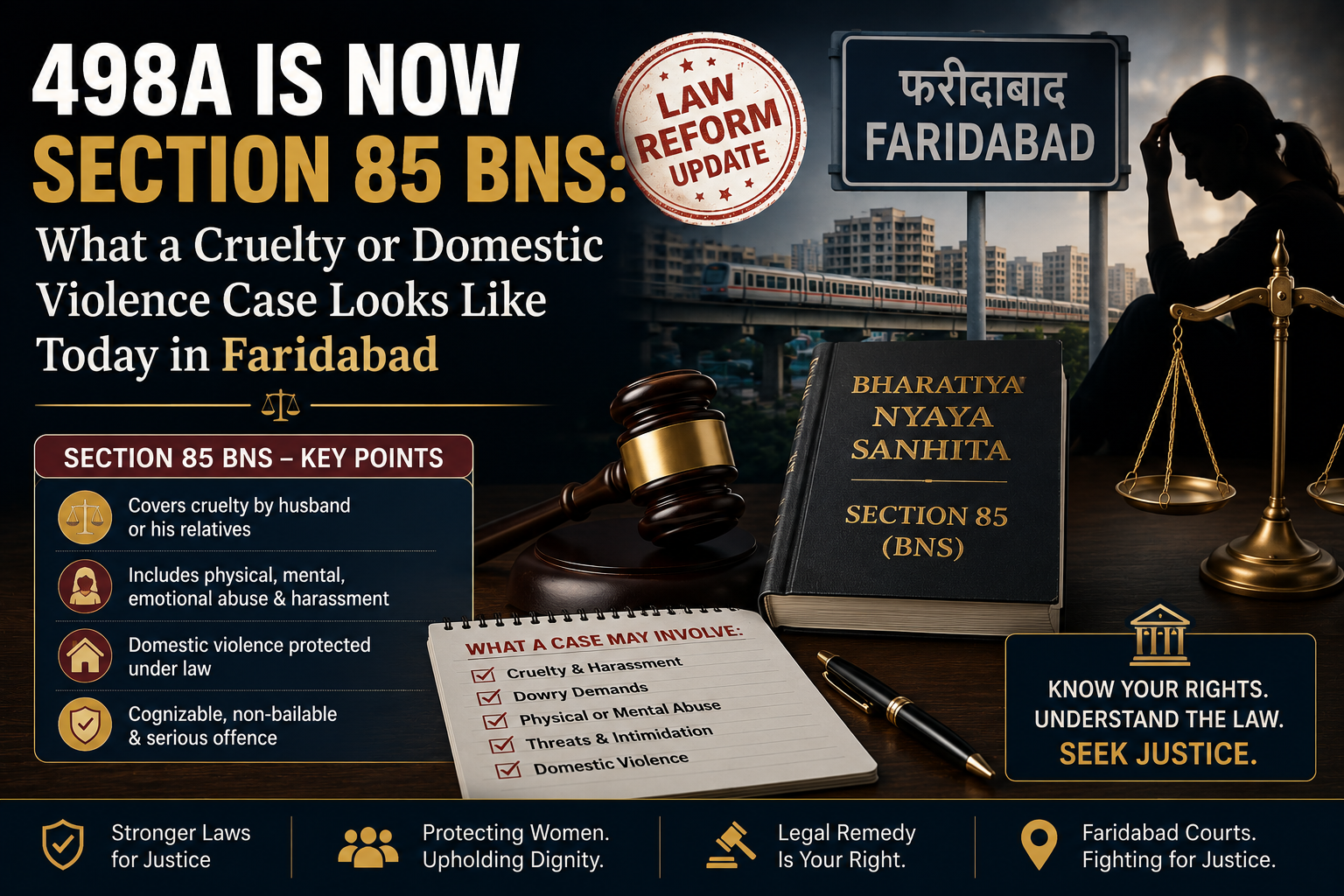
| 498A IPC — cruelty | Section 85 BNS |
| 304B IPC — dowry death | Section 80 BNS |
| 304A IPC — death by negligence | Section 106 BNS |
| 438 CrPC — anticipatory bail | Section 482 BNSS |
| 437 / 439 CrPC — bail | Sections 480 / 483 BNSS |
| 125 CrPC — maintenance | Section 144 BNSS |
| 41A CrPC — notice before arrest | Section 35 BNSS |
| 482 CrPC — High Court quashing | Section 528 BNSS |
If a lawyer or a website is still quoting only the old numbers for a new case, treat that as a warning sign.
The new codes are not just renumbering. Some genuinely useful changes:
This trips up a lot of people. The following are fully intact:
So if someone tells you your cheque bounce case is “now under BNS”, they are mistaken.
Law is specialised. A skilled property lawyer may not be the right person for an NDPS bail application. Ask directly: how many matters like mine have you handled in the last year?
An advocate who appears at the Faridabad District Courts regularly knows the local procedure, the filing practice and the listing pattern. That familiarity saves real time.
Every practising advocate is enrolled with a State Bar Council. You are entitled to ask.
Ask for the fee structure in writing — what is covered, what is extra, and how court fees and expenses are handled. Vague fee arrangements cause most client disputes.
No honest lawyer can promise a result. Anyone guaranteeing bail, a decree, or a “one-day divorce” is telling you what you want to hear.
This is the document authorising your advocate to appear for you. Read it. Keep a copy of everything you sign, along with all case papers and receipts.
The move to BNS, BNSS and BSA is the most significant change to Indian criminal law in over 150 years. For most people, the practical impact is simpler than it sounds: the same conduct, different section numbers, and some genuinely better procedural rights.
What has not changed is the basic advice. Choose an advocate by practice area and local court experience, get your fees in writing, keep your documents organised, and act early — in almost every area of law, from bail to cheque bounce to accident claims, delay is what costs people their case.
If you are looking for a lawyer in Faridabad, start by identifying which of the courts above your matter belongs to, then find someone who works there regularly.
Note: This blog is just for educational purposes; it does not act as legal advice. For legal representation, contact a practising advocate. This blog cannot be used as legal evidence or for legal purposes.

 Blog
Blog
Not every marriage ends in a courtroom battle. Sometimes both people simply accept that it is over, and want to.
 Blog
Blog
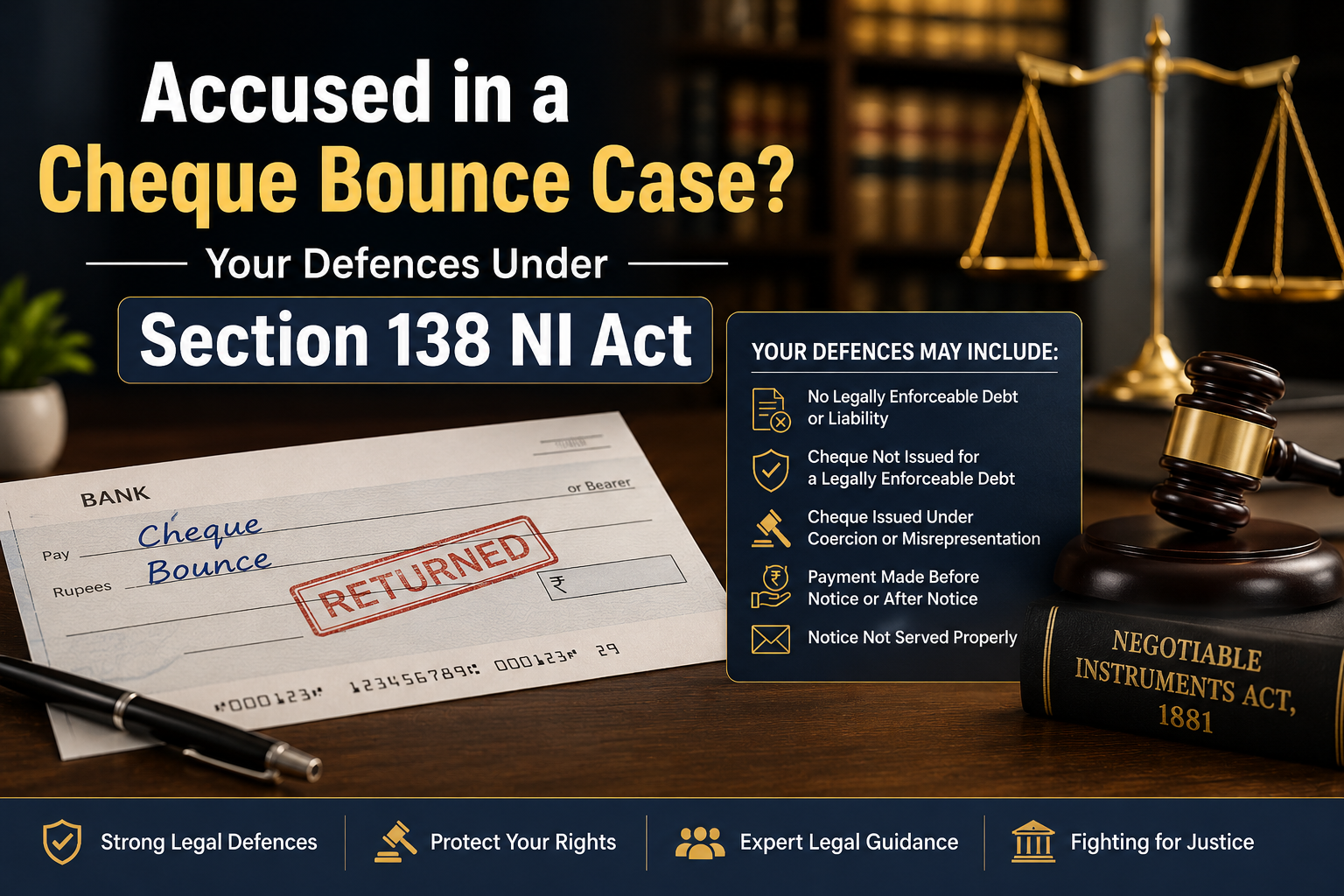
A court summons arrives. Your name is on it, and the words "Section 138, Negotiable Instruments Act" stare back at.
 Blog
Blog
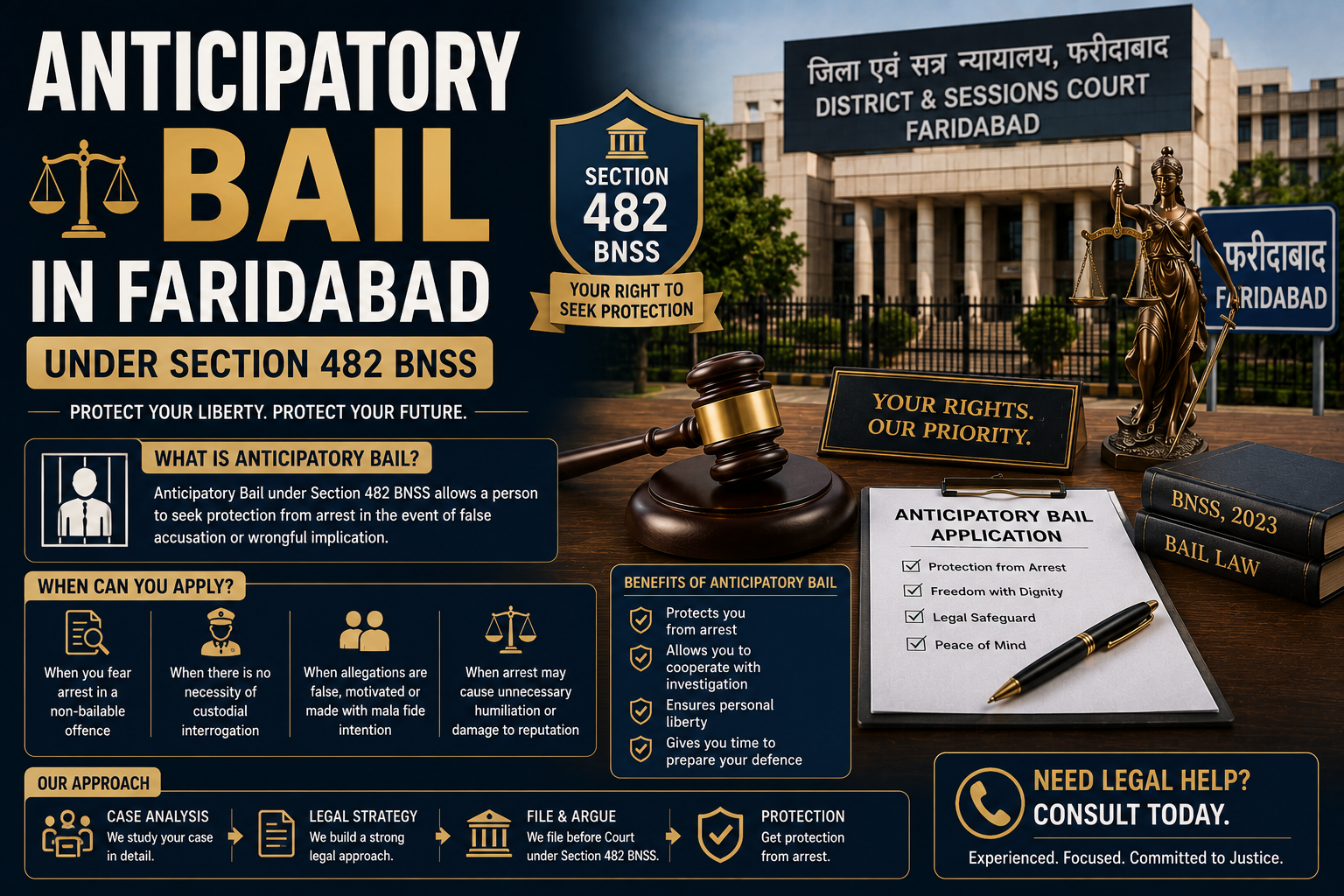
Getting a call that an FIR might be filed against you is frightening. Your mind races. Will the police arrest.
 Blog
Blog
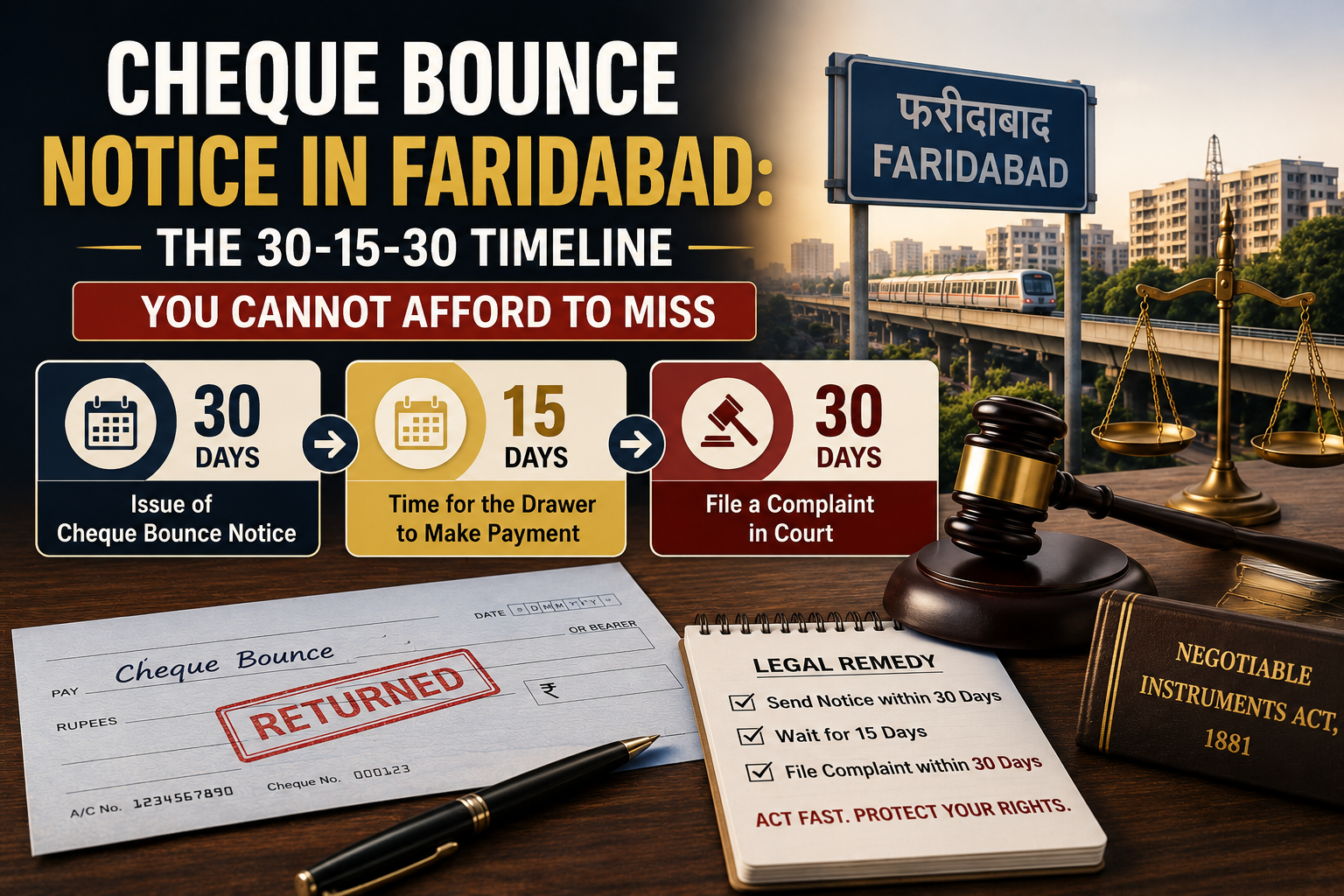
Someone gave you a cheque. You deposited it. The bank returned it unpaid. Right now, a clock has started running.
 Blog
Blog
For decades, three characters carried enormous weight in Indian family disputes: 498A. Mention that number and everyone understood — a.
 Blog
Blog
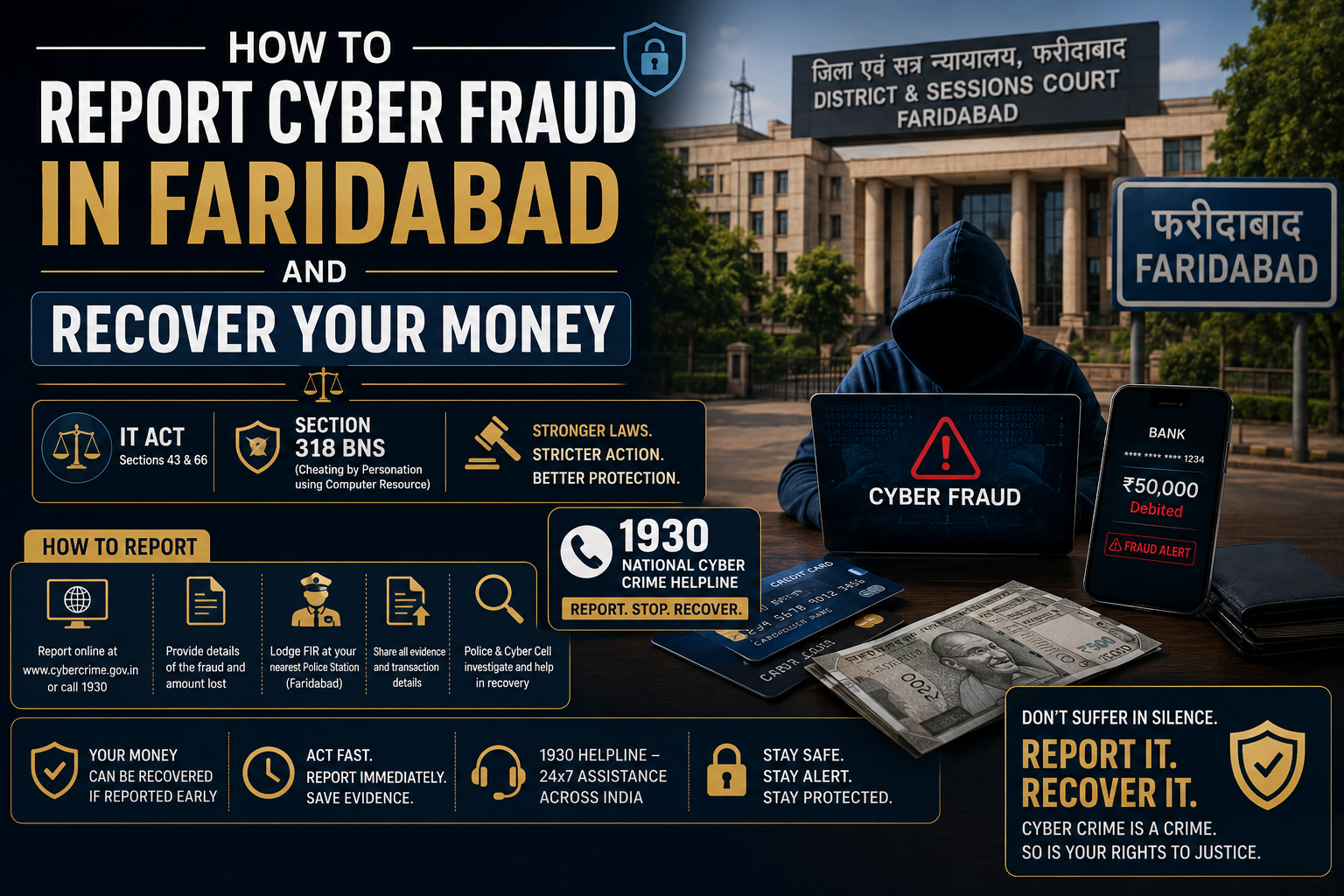
You get an SMS. Money has left your account — money you never authorised. Your hands shake. You call the.