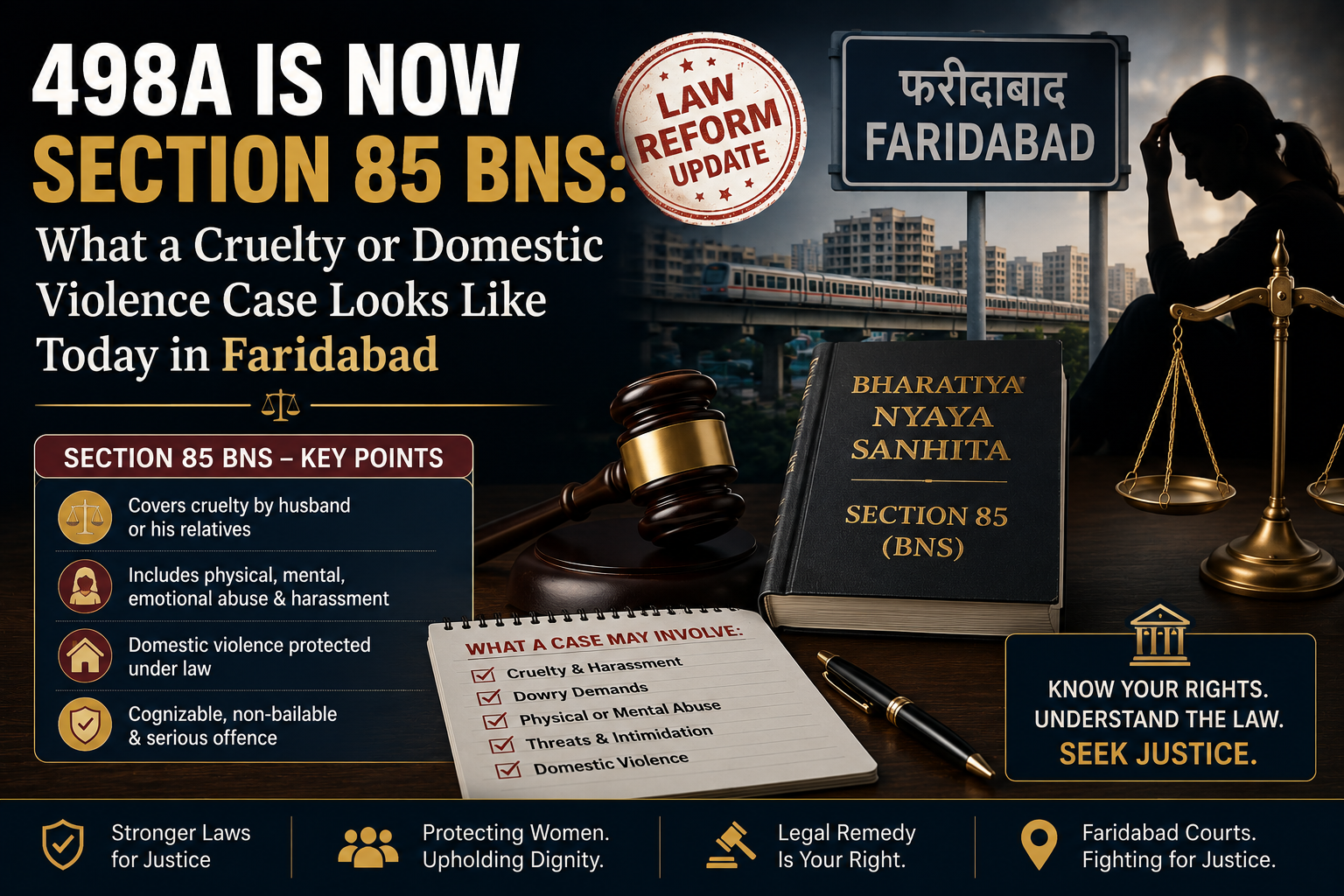
Cheque Bounce Notice in Faridabad: The 30-15-30 Timeline You Cannot Afford to Miss
Someone gave you a cheque. You deposited it. The bank returned it unpaid. Right now, a clock has started running.
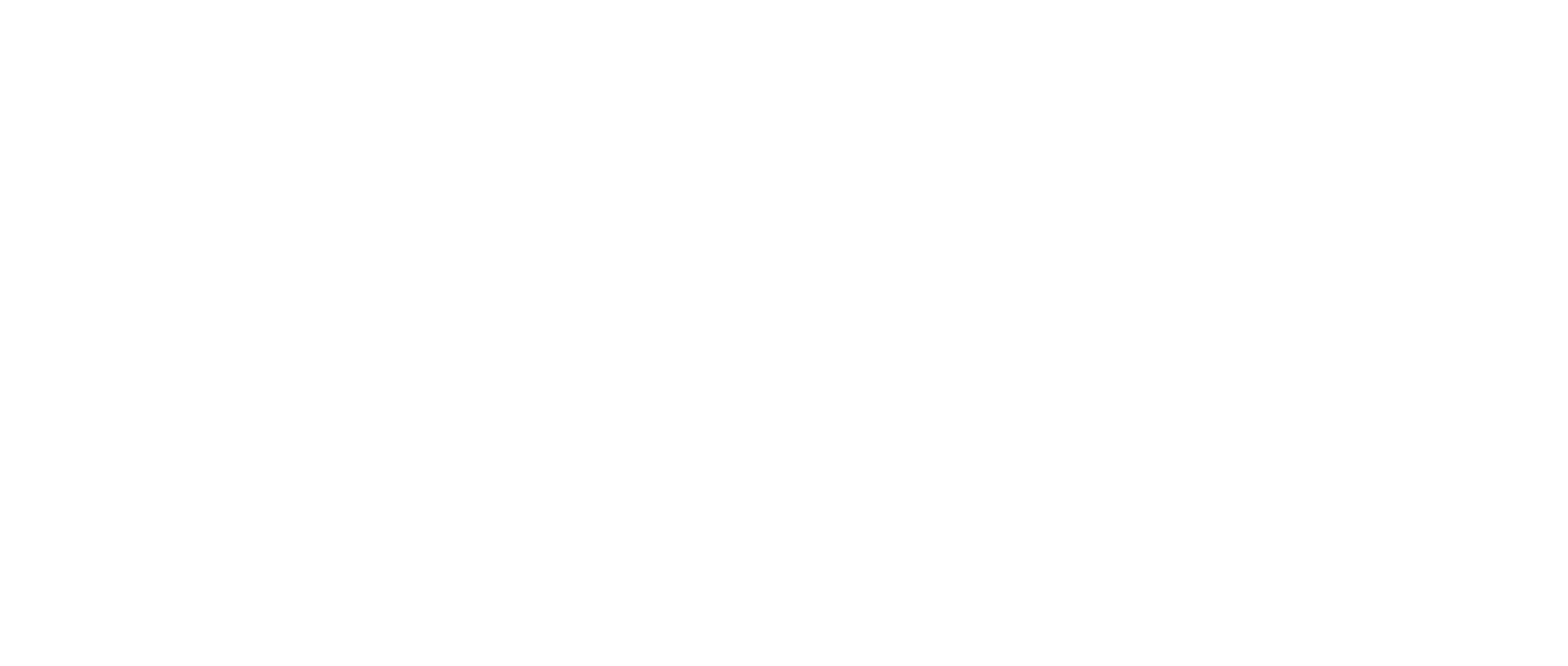
For decades, three characters carried enormous weight in Indian family disputes: 498A.
Mention that number and everyone understood — a wife had filed a cruelty case against her husband and his family. Since 1 July 2024, that section number no longer exists.
Section 498A of the IPC is now Section 85 of the Bharatiya Nyaya Sanhita (BNS), 2023.
The number changed. The law, in substance, did not. But the renumbering has caused real confusion in Faridabad — for complainants, for accused families, and even in casual conversation. Here is a clear explanation.
Section 85 punishes the husband or a relative of the husband who subjects a woman to cruelty. The punishment is imprisonment up to three years, plus fine.
Section 86 BNS defines what “cruelty” means — carried over from the old Explanation to 498A:
The offence remains cognizable, non-bailable and non-compoundable.
This is where most confusion arises. A quick reference:
| Earlier | Now |
| 498A IPC — cruelty | Section 85 BNS |
| Explanation to 498A — meaning of cruelty | Section 86 BNS |
| 304B IPC — dowry death | Section 80 BNS |
| 509 IPC — insulting a woman’s modesty | Section 79 BNS |
| 125 CrPC — maintenance | Section 144 BNSS |
| 41A CrPC — notice before arrest | Section 35 BNSS |
| 438 CrPC — anticipatory bail | Section 482 BNSS |
| 482 CrPC — High Court quashing powers | Section 528 BNSS |
Notice the last two. The number 482 now means something completely different depending on which code you are reading — anticipatory bail under BNSS, but quashing under the old CrPC. Even experienced people mix these up.
Several important laws were untouched by the new codes:
These are two different things, and people constantly confuse them.
Filed through the police, leads to FIR, investigation, arrest and trial. The outcome is punishment.
Filed as an application before a Magistrate. The outcome is relief, not jail:
The DV Act covers not only wives but also live-in partners, mothers, sisters and daughters — and it can be used alongside a criminal case.
Panic leads to bad decisions. Some ground rules:
Arrest is not automatic. In Arnesh Kumar v. State of Bihar, the Supreme Court held that for offences punishable with up to seven years, police must not arrest mechanically. They should first issue a notice of appearance — now under Section 35 BNSS. Since Section 85 carries a maximum of three years, this safeguard applies squarely.
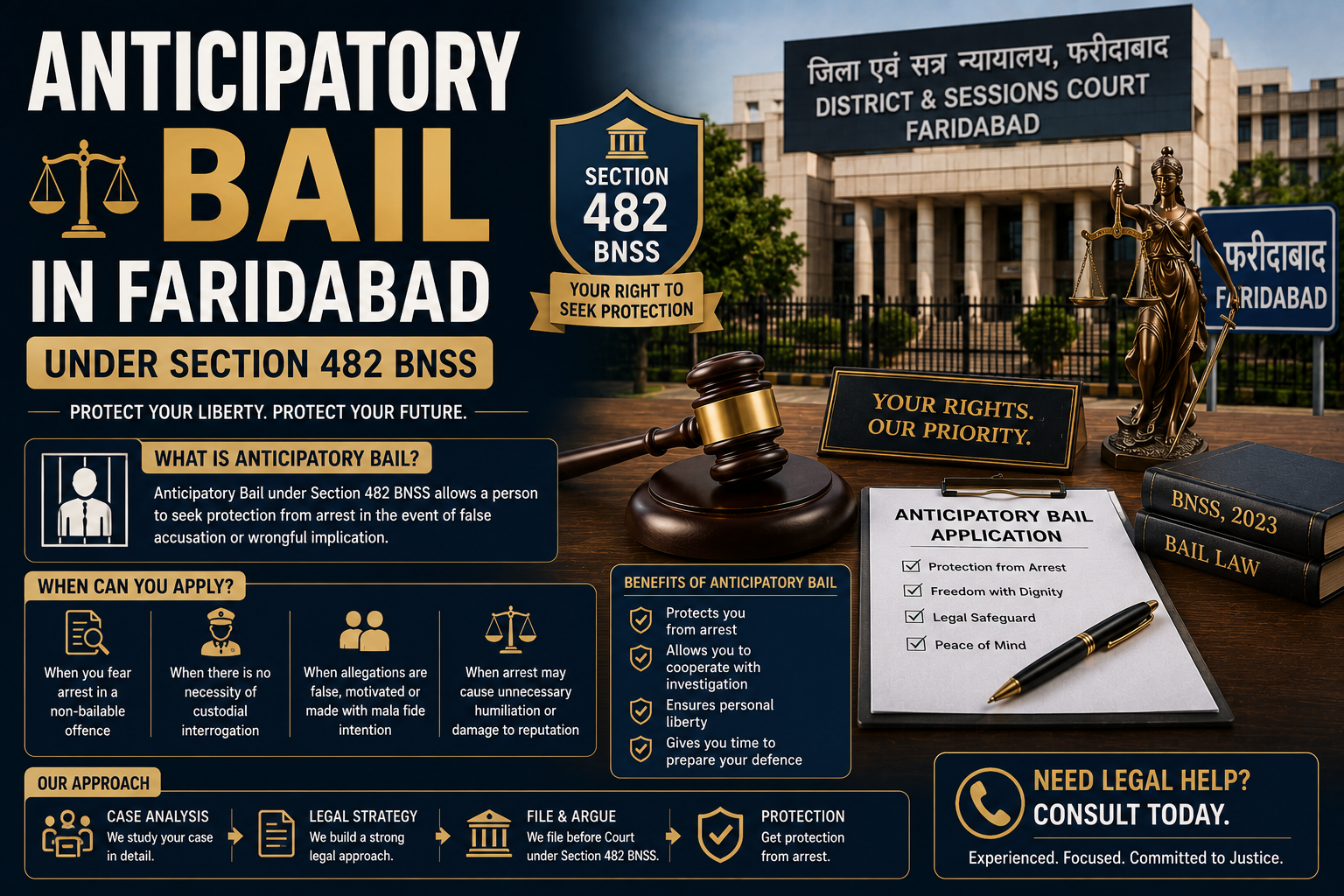
Anticipatory bail is available under Section 482 BNSS, and is commonly granted in such matters.
Do not destroy evidence or pressure the complainant. It converts a defensible case into a serious one.
Courts do scrutinise vague allegations. The Supreme Court has repeatedly cautioned against “omnibus” complaints that name every distant relative without specific allegations, and such names are often dropped or quashed.
Section 85 is technically non-compoundable. However, where the parties have genuinely settled — usually alongside a mutual consent divorce — the High Court can quash the FIR using its inherent powers under Section 528 BNSS. The Supreme Court has approved this approach in matrimonial disputes that are essentially private in nature.
In practice, many Faridabad matrimonial matters conclude this way: a settlement, a mutual divorce, and quashing of the criminal case together.
Your case is stronger when it is specific. Record dates, incidents and names. Preserve messages, medical records and any evidence of dowry demands. Vague, sweeping allegations against an entire family weaken a genuine complaint far more than people realise.
The shift from 498A to Section 85 BNS is a change of label, not of substance. Cruelty and dowry harassment remain serious offences, and the protections for women remain intact — while the safeguards against misuse also continue.
If you are on either side of such a case in Faridabad, the renumbering itself is a reason to be careful: a petition citing the wrong code can cause needless delay. Consult a matrimonial case advocate in Faridabad who is working with the new provisions daily.
Note: This blog is just for educational purposes; it does not act as legal advice. For legal representation, contact a practising advocate. This blog cannot be used as legal evidence or for legal purposes.

 Blog
Blog
Someone gave you a cheque. You deposited it. The bank returned it unpaid. Right now, a clock has started running.
 Blog
Blog
Not every marriage ends in a courtroom battle. Sometimes both people simply accept that it is over, and want to.
 Blog
Blog
Getting a call that an FIR might be filed against you is frightening. Your mind races. Will the police arrest.
 Blog
Blog
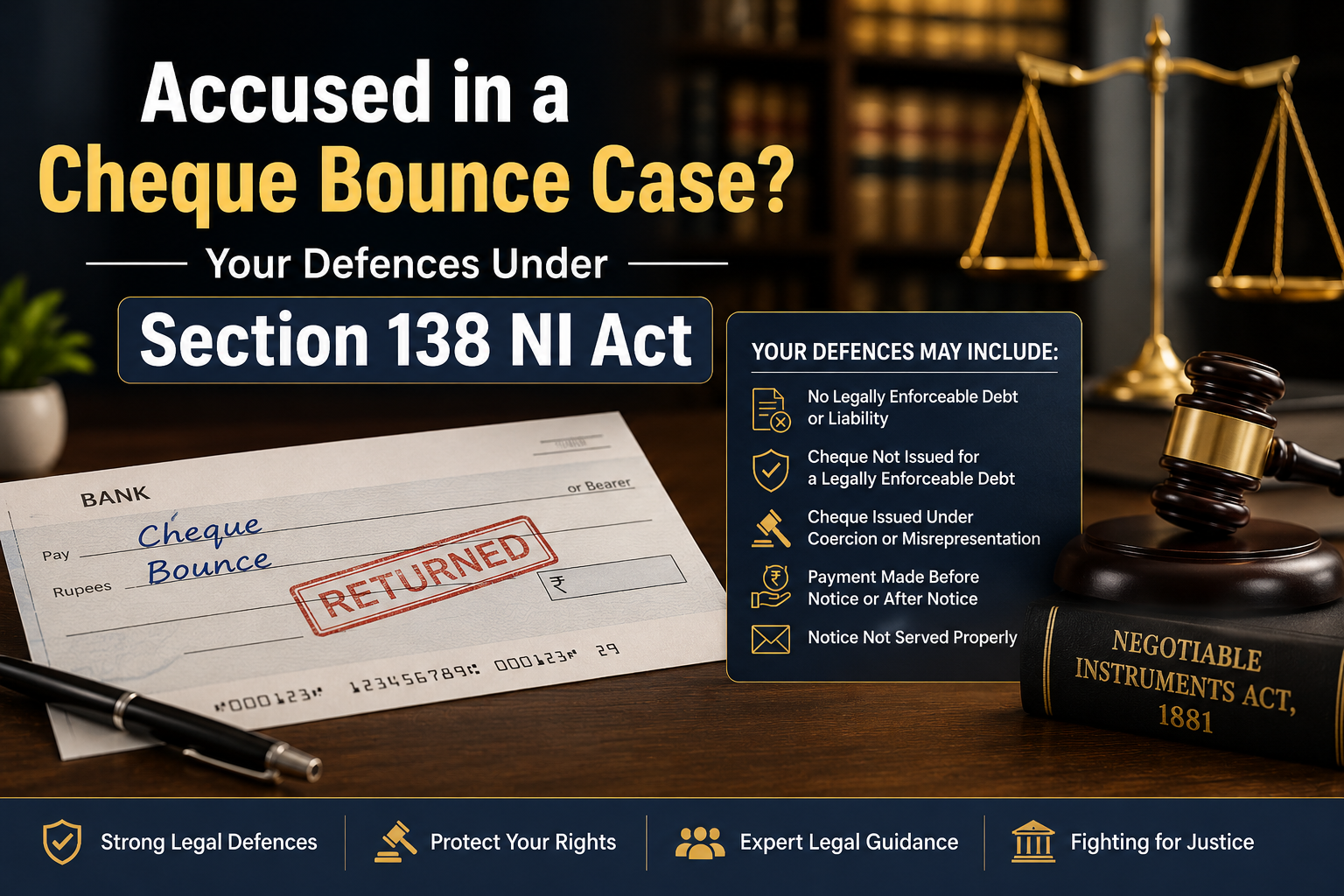
A court summons arrives. Your name is on it, and the words "Section 138, Negotiable Instruments Act" stare back at.
 Blog
Blog
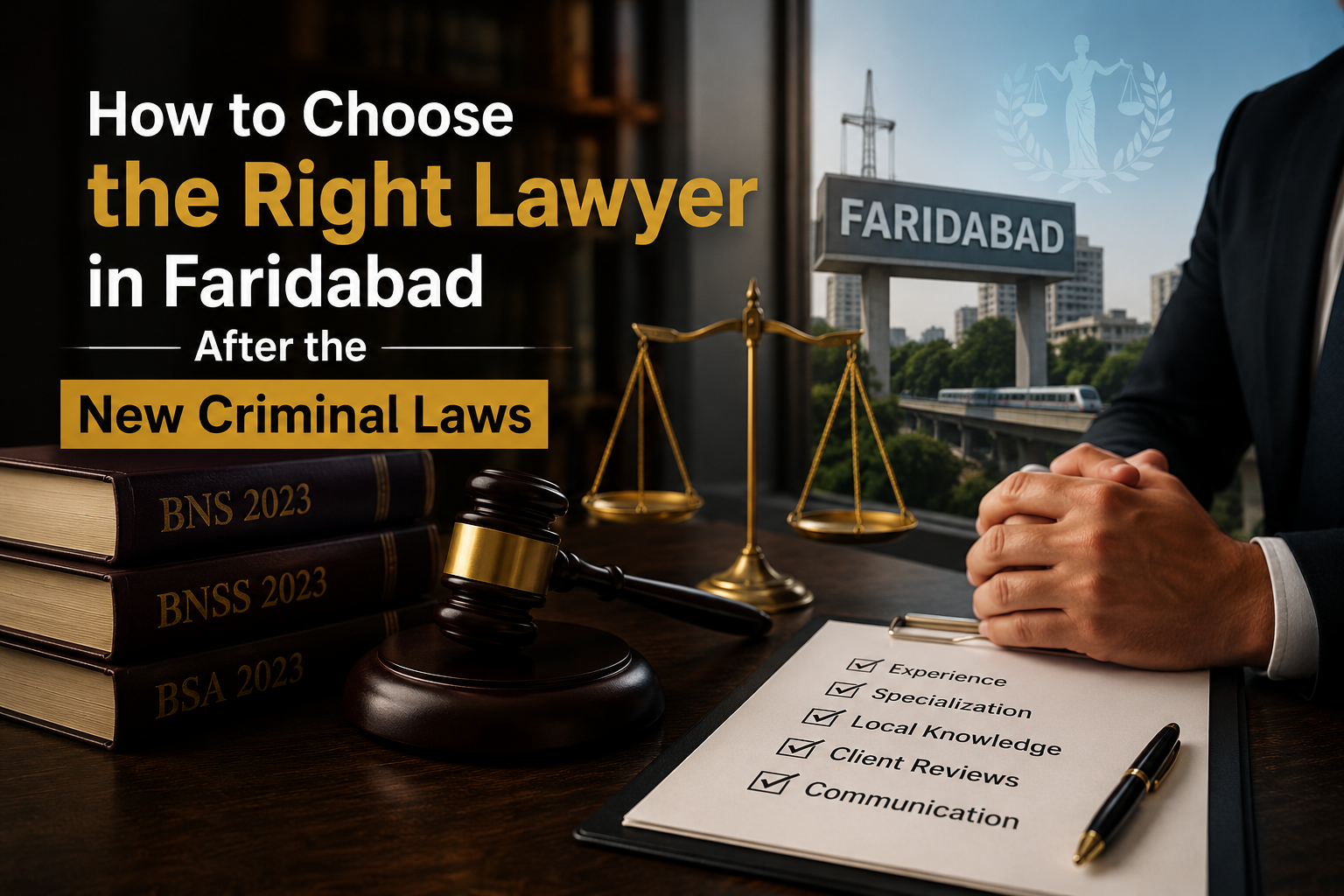
On 1 July 2024, India changed the foundation of its criminal justice system. Three colonial-era laws were replaced: Indian Penal.
 Blog
Blog
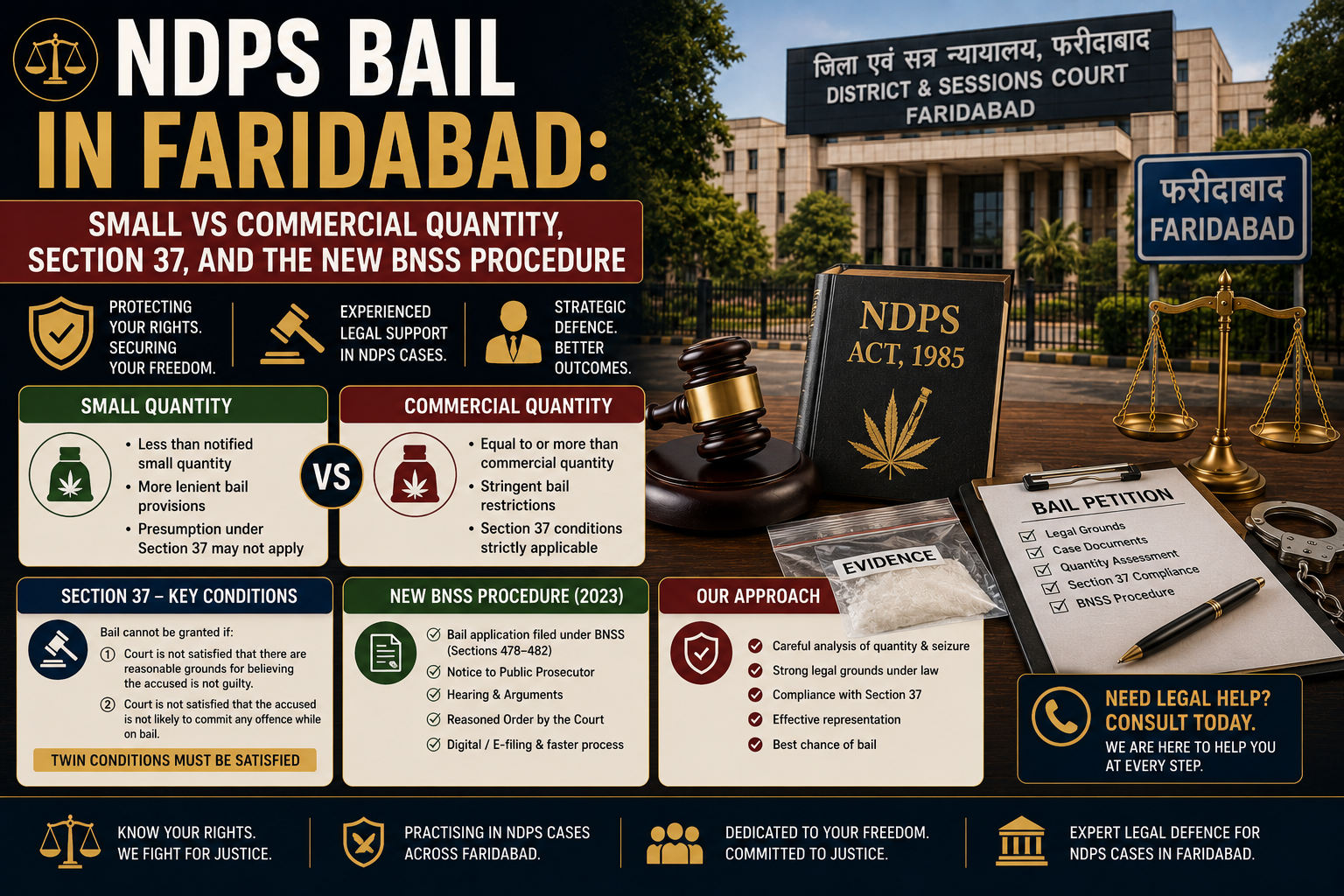
When a family member is arrested in a drug case, the first question is always the same: how soon can.