How to Report Cyber Fraud in Faridabad and Recover Your Money: IT Act, Section 318 BNS and the 1930 Helpline
You get an SMS. Money has left your account — money you never authorised. Your hands shake. You call the.

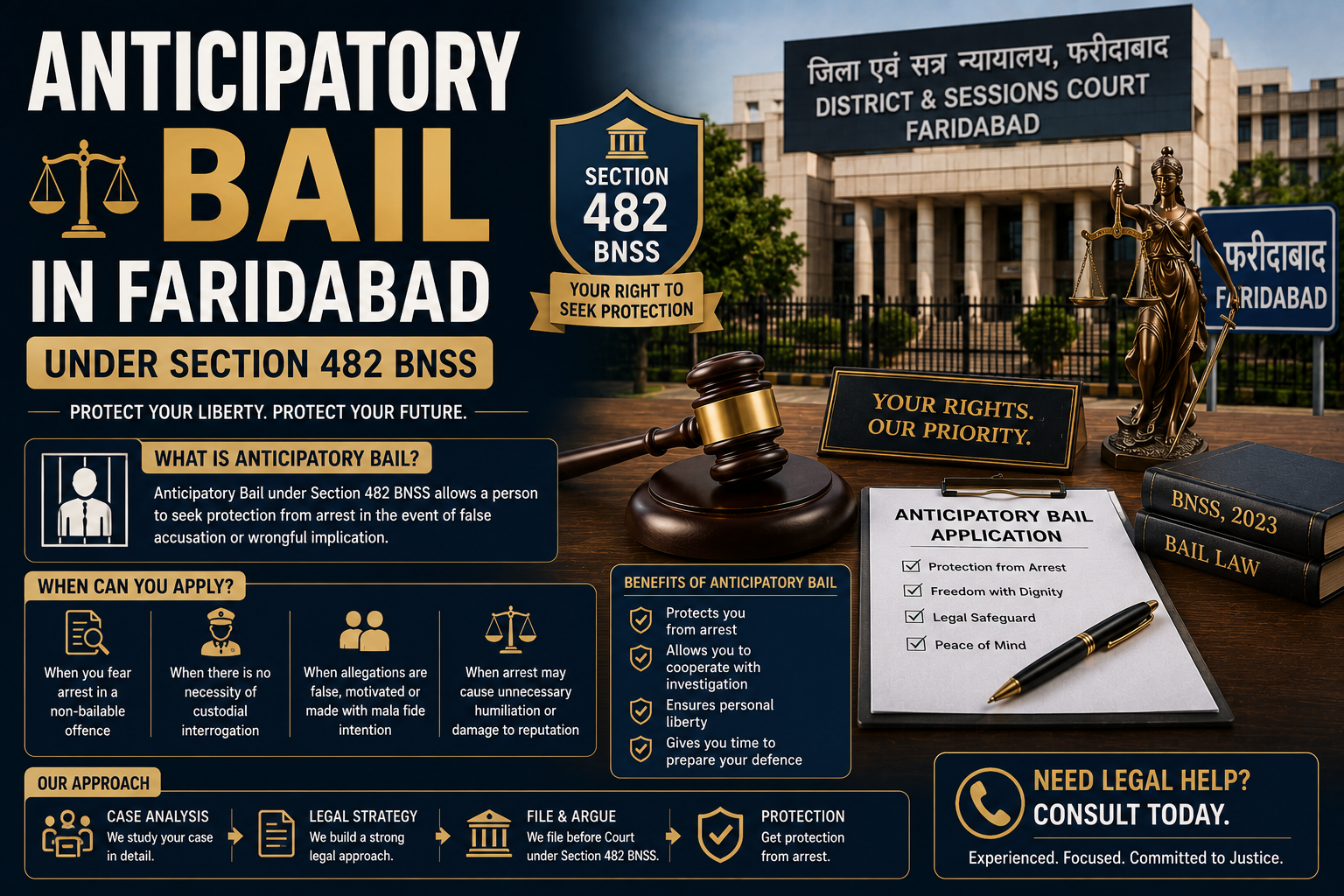
Getting a call that an FIR might be filed against you is frightening. Your mind races. Will the police arrest me? Should I hide? Can I do something before the handcuffs come out?
The good news is that Indian law gives you a shield for exactly this situation. It is called anticipatory bail, and with the new criminal laws now in force, it comes under Section 482 of the Bharatiya Nagarik Suraksha Sanhita (BNSS), 2023 — which replaced the old Section 438 of the CrPC.
If you live in or around Faridabad, here is everything you need to know in plain language.
Anticipatory bail is simply bail before arrest.
Regular bail is applied for after a person is arrested. Anticipatory bail is different — it is for someone who only fears arrest but has not been arrested yet. If the court grants it, the police cannot put you behind bars in that case; you are released on the spot on certain conditions, even if they come to arrest you later.
Think of it as a protective umbrella you open before it starts raining.
You can seek anticipatory bail when:
You do not always have to wait for the FIR. If there is a real threat of arrest, you can move the court early.
Under Section 482 BNSS, an anticipatory bail application can be filed before:
In practice, most people approach the Faridabad Sessions Court first. This is usually wiser, because if the Sessions Court rejects your plea, you still have the High Court as a second option. If you go straight to the High Court, it may send you back to try the lower court first.
Here is how it usually works on the ground in Faridabad.
The moment you sense trouble, speak to a local criminal lawyer. Time is critical. An experienced advocate will assess the FIR (if any), the sections involved, and your chances.
Your lawyer prepares the anticipatory bail application, supported by:
The application is filed at the Faridabad Sessions Court. A hearing date is fixed, and a notice is generally sent to the Public Prosecutor and the investigating officer.
Both sides argue. Your advocate explains why you deserve protection; the prosecution may oppose. The judge weighs the facts carefully.
If satisfied, the court grants anticipatory bail — often with conditions.
Anticipatory bail is rarely unconditional. The court may direct you to:
Breaking these conditions can get your bail cancelled — so take them seriously.
Judges look at the full picture, including:
The Supreme Court has long held that anticipatory bail protects honest citizens from harassment through false cases — a principle still very much alive under the new law.
Anticipatory bail is not a licence to escape investigation. You still have to cooperate. It also does not apply to certain serious offences where the law restricts such relief. And for some special statutes — like NDPS or economic offences — courts are far more cautious. This is exactly why local, case-specific legal advice matters so much.
Anticipatory bail under Section 482 BNSS is one of the most powerful protections available to an ordinary citizen facing a false or premature accusation. It lets you stay free, defend yourself with dignity, and avoid the trauma of unnecessary arrest.
If you are in Faridabad and fear arrest, do not panic and do not wait. Act early, gather your documents, and consult a practising criminal advocate who knows the Faridabad courts. The right move at the right time can make all the difference between freedom and a jail cell.

 Blog
Blog
You get an SMS. Money has left your account — money you never authorised. Your hands shake. You call the.
 Blog
Blog
For decades, three characters carried enormous weight in Indian family disputes: 498A. Mention that number and everyone understood — a.
 Blog
Blog
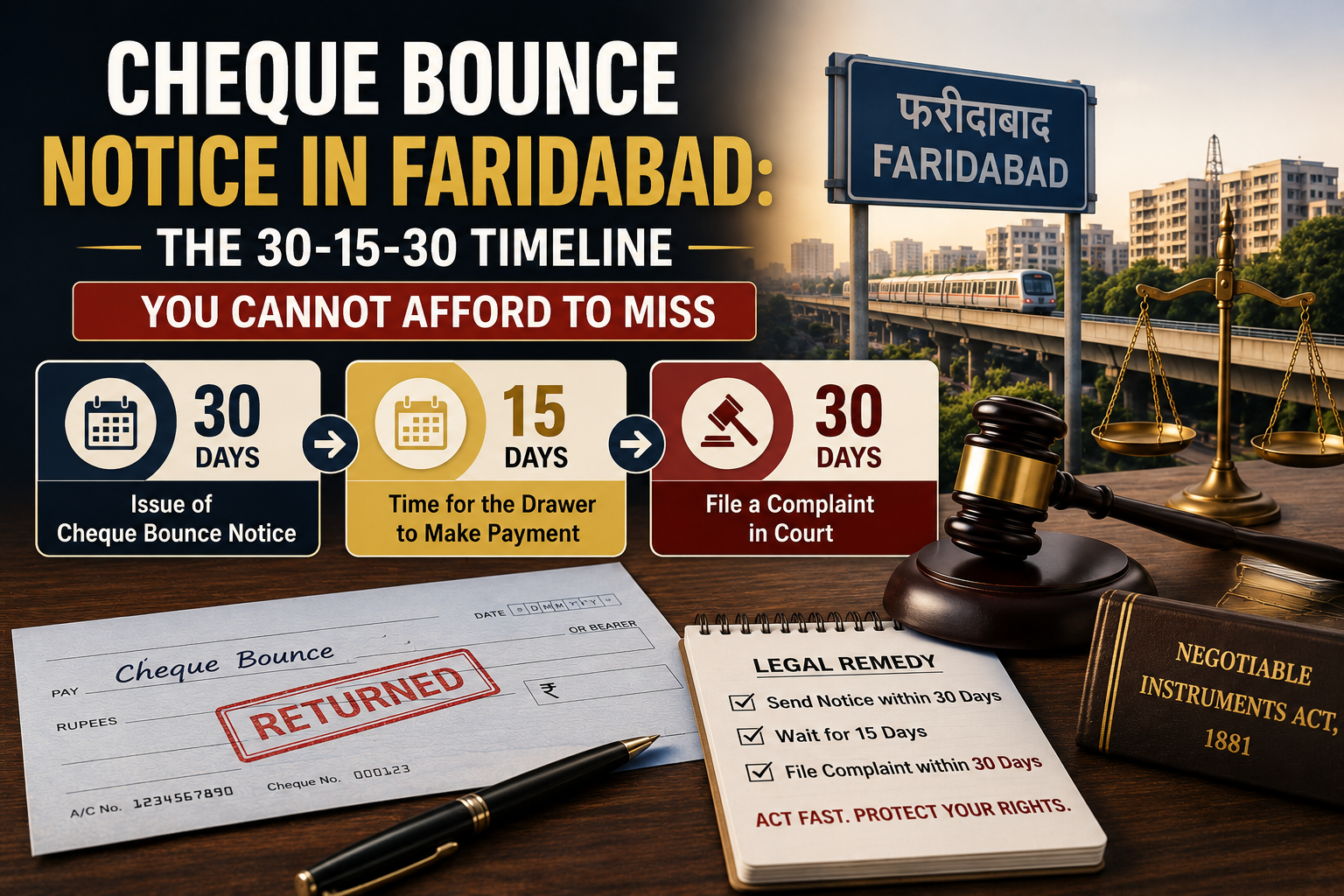
Someone gave you a cheque. You deposited it. The bank returned it unpaid. Right now, a clock has started running.
 Blog
Blog
On 1 July 2024, India changed the foundation of its criminal justice system. Three colonial-era laws were replaced: Indian Penal.
 Blog
Blog
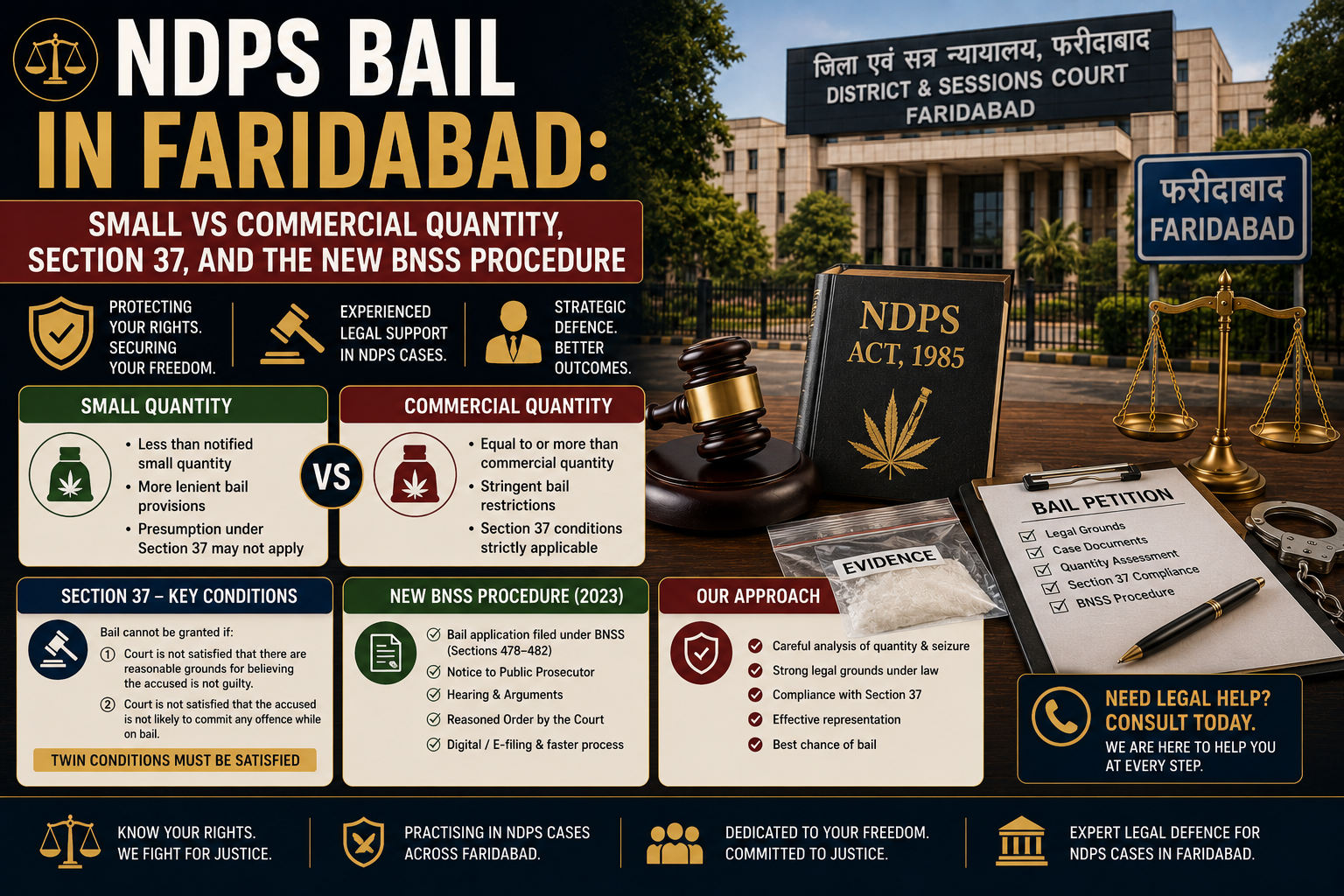
When a family member is arrested in a drug case, the first question is always the same: how soon can.
 Blog
Blog
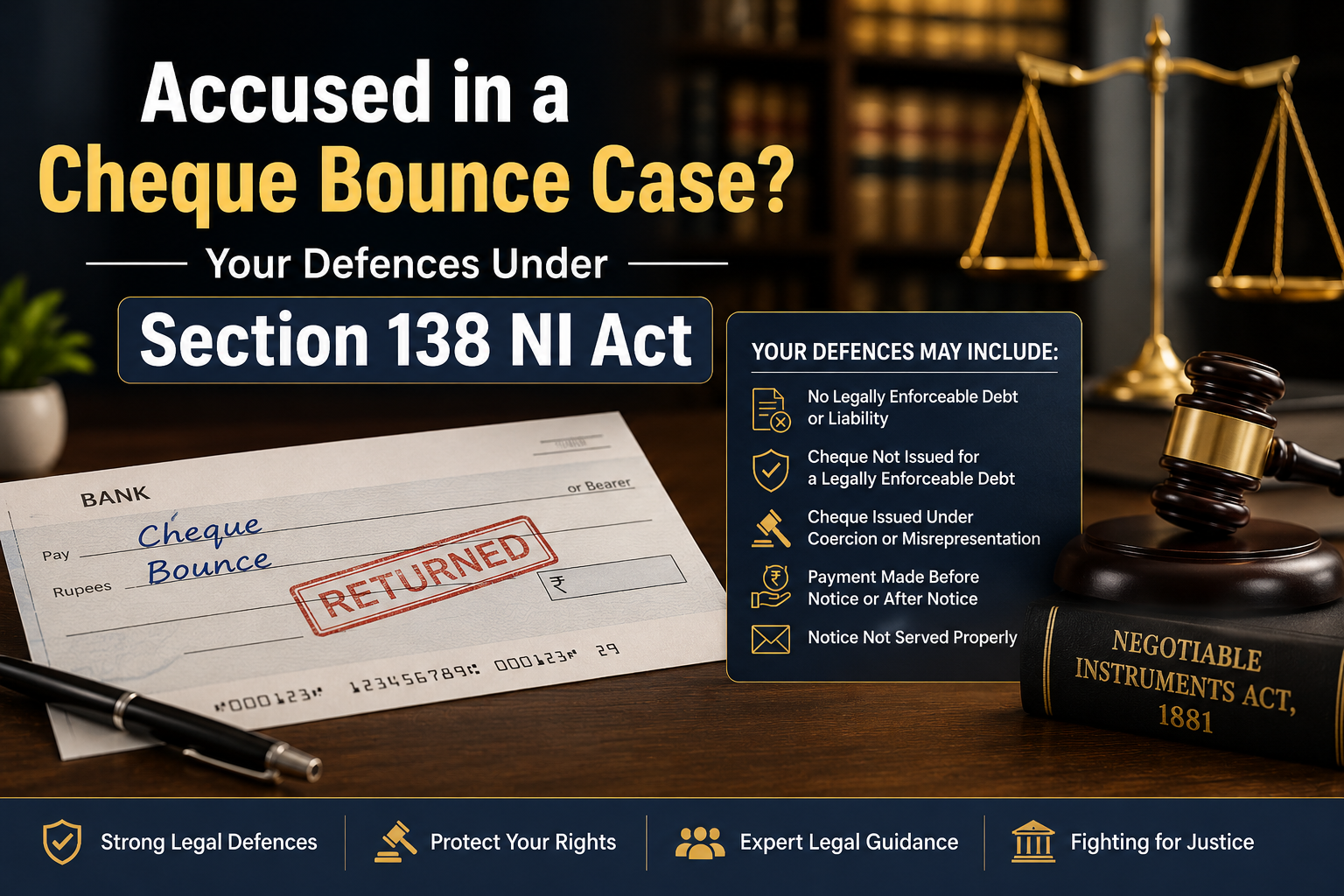
A court summons arrives. Your name is on it, and the words "Section 138, Negotiable Instruments Act" stare back at.