Challenging a 107/151 Case: Legal Defense Strategies in Faridabad under the New BNSS Framework
Being booked under Sections 107/151 can be unsettling, especially when it happens suddenly during a dispute or public situation. With.
If you are a business owner or an individual who deals with cheques in India, you know that a bounced cheque is a serious problem. The law, specifically Section 138 of the Negotiable Instruments Act, 1881, treats it as a criminal offense.
As we move through 2025, many clients have been asking us: “Is there a new law or a new rule of cheque bounce case 2025?”
The short answer is: While the core law of Section 138 has not been completely replaced, Yes, there are significant new rules and guidelines, primarily from the Supreme Court of India, that have drastically changed how these cases are handled.
These new rules are designed to speed up the process and reduce the massive backlog of cases in our courts. At new.lawyerinfaridabad.com/, we believe it's crucial for you to understand these changes.
The most important “new rules” come from a series of guidelines issued by the Supreme Court of India to fast-track cheque bounce cases. The courts are no longer tolerating endless delays.
Here are the key changes you must know about:
This is a major procedural change. In the past, cases would get stuck for months or even years because the accused would intentionally avoid receiving the court summons.
To encourage quick and early settlements, courts are being directed to create dedicated online payment portals, QR codes, or UPI links.
To save the court’s time, every new complaint must now include a “synopsis” or a standardized one-page summary right at the top. This synopsis must clearly state all the key facts:
This helps the Magistrate understand the case in seconds and speeds up the initial hearing.
The Supreme Court has set a clear, cost-based structure to encourage compromise (settlement) at different stages.
The message is clear: the earlier you settle, the better.
This is another common question. The new Bharatiya Nagarik Suraksha Sanhita (BNSS) (which replaces the CrPC) has introduced a new procedure (Section 223) for private complaints.
However, the Karnataka High Court has recently clarified that the Negotiable Instruments Act is a “Special Law.” This means its own procedures (like Section 142 of the NI Act) will override the general procedures of the BNSS.
In simple terms: Cheque bounce cases will continue to follow the special, faster procedure laid out in the Negotiable Instruments Act, not the new general rules for all other private complaints.
If you are someone who has a cheque bounce case, these new rules are a double-edged sword:
Navigating these new, faster-paced procedures requires an expert. Whether you are filing a case or defending one, a skilled Cheque Bounce advocate faridabad is essential. The team at new.lawyerinfaridabad.com/, led by Advocate Satish Chauhan, understands these new guidelines and can help you build the strongest possible case.
If you are dealing with a dishonored cheque, don’t wait. A Cheque bounce case lawyer faridabad can ensure your legal notice is correct and your complaint is filed in perfect compliance with all the new rules.
Disclaimer: This article is for informational and educational purposes only and does not constitute legal advice. The information provided is not intended to in court or for any legal proceedings. For advice specific to your case, please contact a qualified advocate.

Being booked under Sections 107/151 can be unsettling, especially when it happens suddenly during a dispute or public situation. With.
Divorce is never an easy decision. It involves emotional, social, and legal challenges, especially when couples are unsure about their.
The New Wage Code 2025 has become one of the most discussed labour law reforms in India, especially among employees.
 law
law
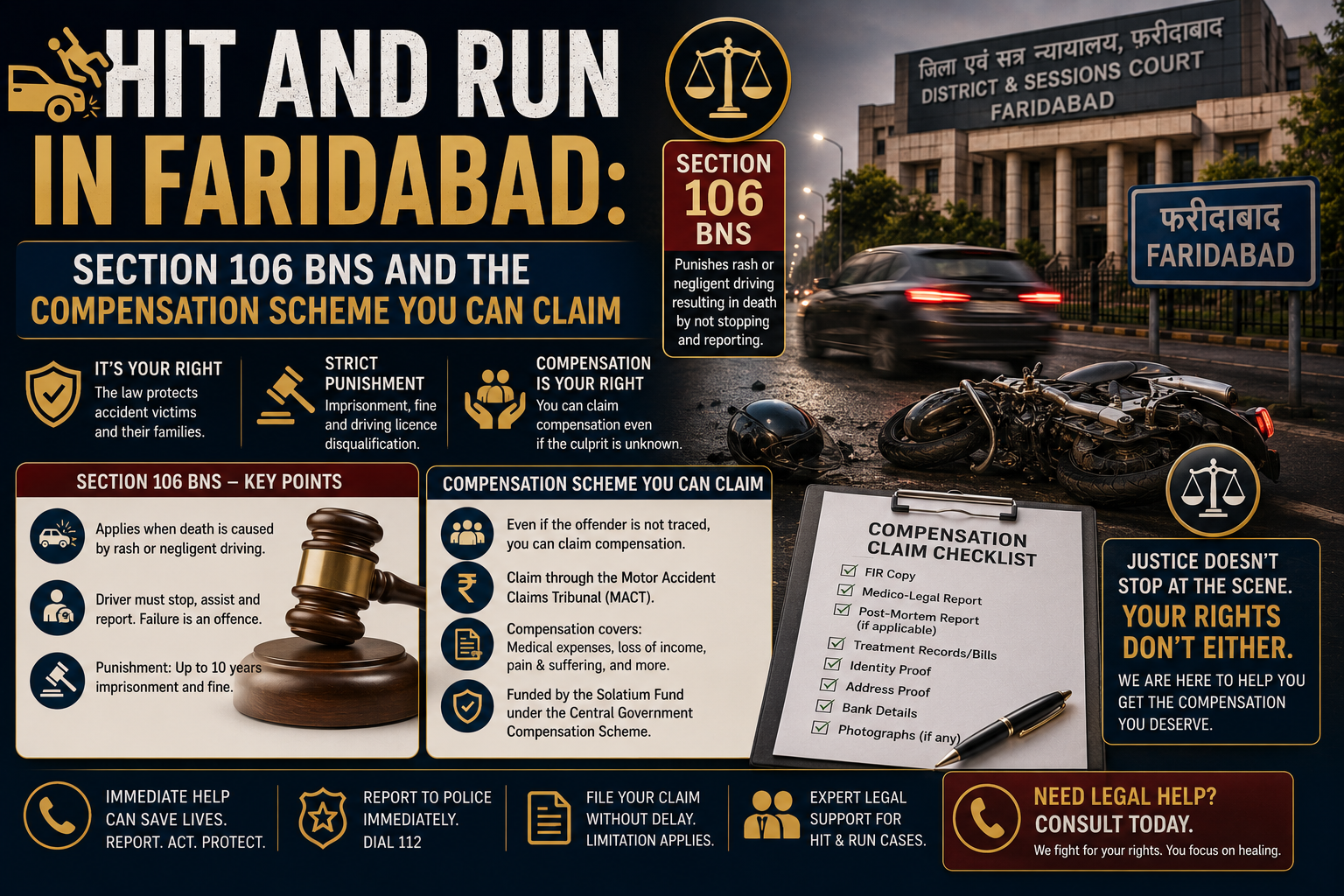
A vehicle hits someone on the road and speeds away. No number plate, no witness, no one to blame. The.
 law
law
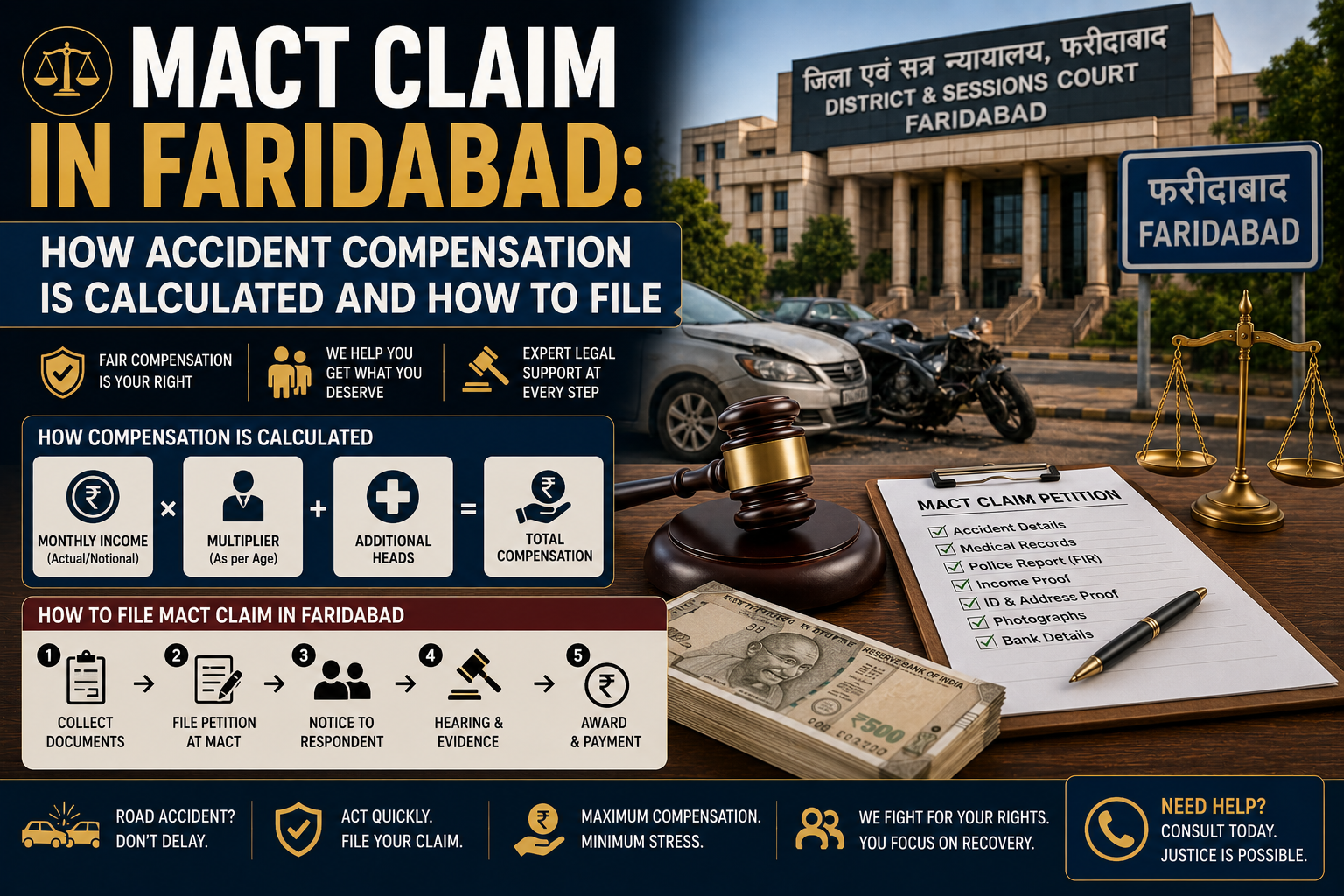
A road accident changes everything in a moment. Hospital bills pile up, the family's earning member may be gone, and.
 law
law
Experiencing a bounced cheque can be a frustrating and stressful situation. Not only does it disrupt your financial plans, but.